
My 2013 Ultralight Backpacking Gear List (10.5 lb Base Weight)

The Big Three (Backpack, Shelter, Sleep System)
Weight: 6.1 lbs
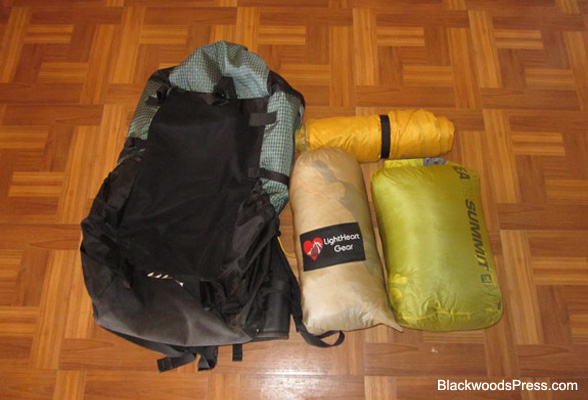
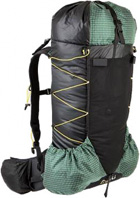
- Backpack: ULA Equipment CDT (24 oz)
- Shelter: Lightheart Gear Solong 6 (32 oz)
- Sleeping Bag: Marmot Hydrogen 30°F (23 oz)
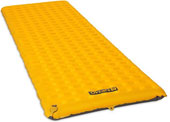
- Sleeping Pad: Exped Synmat UL (17 oz)
- Stuff Sack: Sea to Summit Ultra-Sil 13L (1.4 oz)
Clothing Packed
Weight: 1.6 lbs
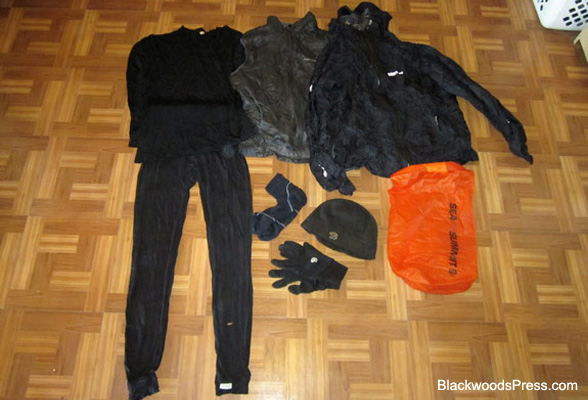
- Insulated Jacket: Montbell UL Thermawrap Vest (6 oz)
- Rain Jacket: Outdoor Research Helium II Jacket (6.6 oz)
- Base Layer Shirt: Terramar Thermasilk Shirt (3.6 oz)
- Base Layer Pant: Terramar Thermasilk Pant (3.4 oz)
- Warm Cap: Mountain Hardware Microdome Cap (0.9 oz)
- Gloves: Mountain Hardware Powerstretch Gloves (1.4 oz)
- Spare Socks: Smartwool PHD Outdoor Light Mini Socks (2 oz)
- Stuff Sack: Sea to Summit Ultra-Sil 13L (1.4 oz)
Cooking & Hydration
Weight: 0.9 lb
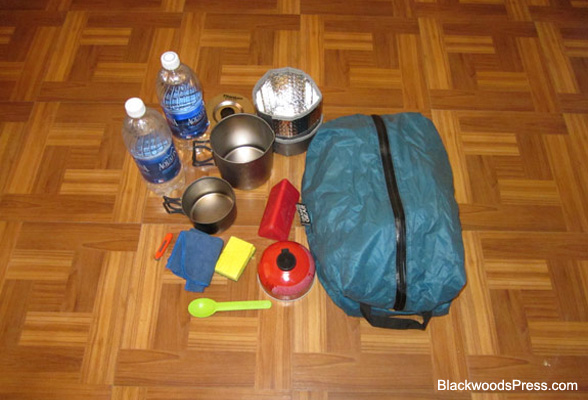
- Camp Stove: MSR Pocket Rocket (2.6 oz)
- Cook Pot: Evernew Titanium Pasta Pot (4.1 oz)
- Cup: Evernew 400FD Titanium Cup (1.7 oz)
- Pot Cozy: Home-made Pot Cozy (1.4 oz)
- Spoon: Yogurt Shop Spoon (0.2 oz)
- Pot Scrubber: Scotch-Brite Pad/Sponge (0.4 oz)
- Dish Towel: Pack Towel (0.3 oz)
- Water Bottles: Two 1 Liter Aquafina Bottles (3 oz)
- Fire Starter: Spark-Lite Fire Starter (0.5 oz)
Survival & Miscellaneous
Weight: 1 lb
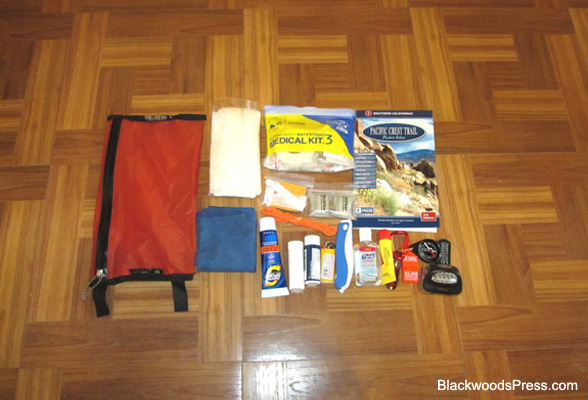
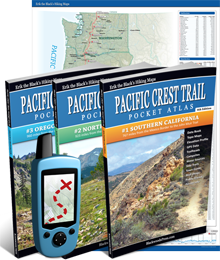
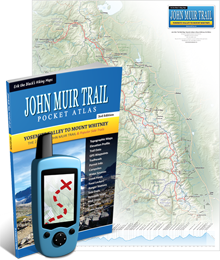
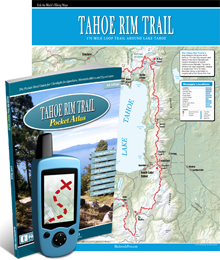
- Trail Map: Pocket Atlas (2.9 oz)
- Compass: Silva Forecaster (0.5 oz)
- Light: Petzl Zipka Headlamp (2.4 oz)
- Multi-Tool: Swiss Army Knife Classic (0.7 oz)
- Fire Starter: Mini Bic Lighter (0.4 oz)
- Backup Fire Starter: Wetfire Tinder Cubes (0.3 oz)
- Whistle: SOL Slim Howler (0.2 oz)
- First Aid Kit: Adventure Medical 0.3 First Aid Kit (3.2 oz)
- Sleeping Pad Repair: Repair Patch (0.2 oz)
- Cord: 20 ft Guyline (0.5 oz)
- Wash Rag: Pack Towel (0.3 oz)
- Toothbrush: Travel Toothbrush (0.7 oz)
- Sunscreen: Sunscreen (1.2 oz)
- Lip Balm: Carmex Lip Balm (0.4 oz)
- Hand Sanitizer: Purrell (1.5 oz)
Luxury Items
Weight: 0.9 lb
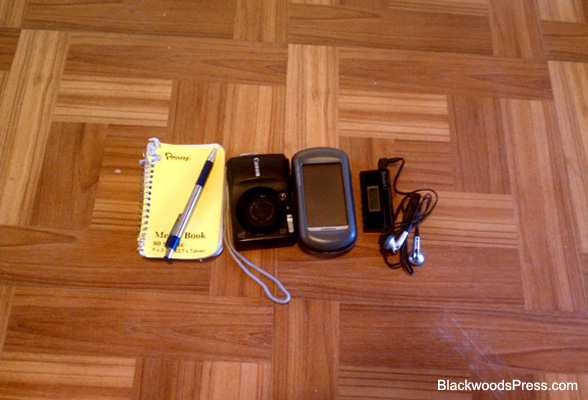
- GPS Receiver: Garmin Oregon GPS (6.2 oz)
- Camera: Canon Digital Camera (5 oz)
- Music: MP3 Player (1 oz)
- Journal: Memo Pad and Pen (2 oz)
Clothing Worn & Items Carried
Weight: 5 lbs
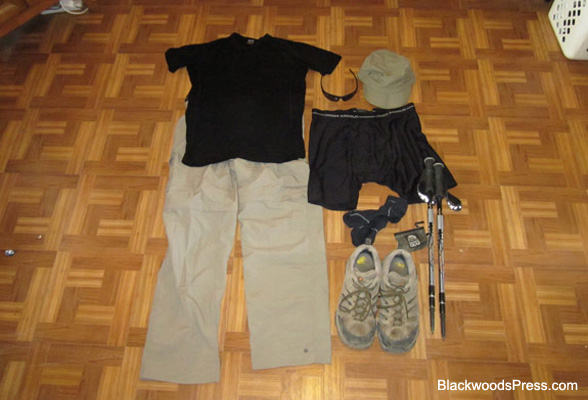
- Shirt: Icebreaker Merino Wool T-Shirt (6 oz)
- Pants: Columbia Silver Ridge Pants (12 oz)
- Underwear: Under Armour Boxer Jock (3.2 oz)
- Socks: Smartwool PHD Outdoor Lite Mini Socks (2 oz)
- Shoes: Merrell Moab Ventilator 13W (32 oz)
- Insoles: Montrail Enduro Sole (4.9 oz)
- Hat: Sunday Afternoons Sun Tripper (2.5 oz)
- Sunglasses: Sunglasses (1.3 oz)
- Wallet: Granite Gear Hiker Wallet (0.4 oz)
- Trekking Poles: Leki Aluminum Trekking Poles (16 oz)
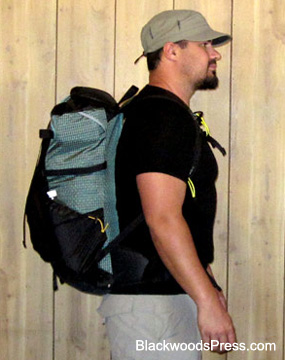
 My name is Erik Asorson, aka "Erik the Black." I'm a long-distance backpacker, cartographer and author of
Love your breakdowns.
What is your experience with hammock tents with over and underquolts, vs ground tent and pad. I’m gearing up (mentally) to do the AP.
@Stephen: I’ve never used a hammock tent before, so I can’t really give you any advice on them.
Great website…….. after looking at your list I got my pack weight down to 27 lbs for 5 days……from 38 lbs. .It took about a year. ULA circuit GREAT pack. I did much research and purchased items close to your weights.
Thanks again…..makes hiking MUCH more enjoyable.
PS: All my stuff is on a spread sheet on my computer….makes life purchasing much easier hahahahahahah!!!!!!
Is your base layers light, med or heavy and is that for three season or four
Hey Erik. Are you able to fit that bear can in the pack listed, and still get your other items in there too? I’ve got the same one and would like to go to a lighter pack, but my concern is that can not fitting. Please advise.
@Rob: I strap my bear canister horizontally on top of the pack using the long center strap. I find this way to be more comfortable since it doesn’t make the back of the pack “round”. This only works with a canister with grooves on the side (like the Bear Vault.)
Good preparations. I loved your bagpack.
Hi Erik,
Love the site and thanks for the gear spread sheet. That was really much appreciated. Love the JMT planning map as well. It’s been a lot of visual help to get an overview for my 2016 hike.
I hike in the PNW and routinely hike in biblical downpour. Word to the wise. Sea to Summit bags get microscopic holes – hundreds of them that are not visible to the eye.
I discovered this when I got stuck in a freak blizzard in OR and found myself puzzled to have a damp to wet Marmot Helium to crawl into. Under the sink the stuff sack looked like a sieve draining from a thousand holes. I now use a Hefty trash compactor bag and have never looked back. Worry free rain trekking.
Awesome site. Happy hiking.
Alex from Seattle.
Erik,
Keeping everything else the same with your set-up could you fit a Lightheart Duo tent into your current pack or would one need to go to the next ULA size up? Thanks. Love your site. Am just getting back into hiking at 57 and planning a 3 day trip with my wife in the Beartooth mountains in Montana this summer or next and just starting to acquire our equipment so may be back with more questions.
@Frank: The Lightheart Duo did fit inside the ULA CDT. However, I have recently switched to the slightly larger ULA OHM 2.0 Pack and I like it even better.
What do you think about the pros and cons of carrying a fleece as a mid or outer insulating layer vs your down vest-only setup? I found I could hike in the fleece, but couldn’t in my puffy jacket, and like you, if I’m too cold, I either keep walking or go to bed in my bag.
@Eric: I like fleeces and wear them at home in the fall and winter, but I find them to be just too bulky and they take up too much room in a pack. I also overheat when wearing a puffy jacket, which is why I prefer a vest in all but the coldest of weather. Something about not having sleeves keeps my core warm without overheating.
Erik,
I’m sure you’ve answered this question before but there’s to many entries for me to filter through.
Anyway I’m wondering how you deal with the closure hole on the CDT with regards to rain.
I’m not big into pack covers but it seems like a large hole for rain to enter.
Thanks,
Tom L
@Tom L: My gear doesn’t reach the very top of the pack so I cinch the cord and then roll the top over a couple of times like a dry bag and secure it with the top strap. Inside the pack my gear is also inside stuff sacks (and dry sacks for the clothes and sleeping bag)
Hey Erik, I’ve got my base weight down to about 12 pounds now, but my pack is about 4 pounds of that. It’s the Deuter Act Lite 65 liter which has been awesome, but is more than I need now. I really like the Gossamer Gear Gorilla, but it’s only a 40 liter pack and I’m wondering if that could handle enough food for the PCT. I hike with my girlfriend so we split the tent, stove, med kit, etc. You think the Gorilla would be big enough?
Thanks,
Jacob
@Jacob: The Gossamer Gorilla has a main pack body of 1,750 cubic inches (same as the ULA CDT.) So it’s a somewhat small pack. I can’t say for certain whether your stuff will fit inside based on the weight (since bulk is also a factor.) If you want to be on the safe side you might want to go with something slightyly larger (like the ULA OHM or the Gossamer Mariposa.) This will give you more room for extra food, water and other things you might need to carry on the PCT temporarily.
Your gear checklist was so helpful! This was my first backpacking since 1983. I had two things I wanted to share. I retired the old Sierra metal cup and used a small size McDonalds coffee cup instead. It is very durable, light, and insulating for hot coffee. I made a pot cozy out of the cheapest auto window sunscreen I could find. The air pocket bubbles were fine and not able to easily pop like some of the other screens. I cut the left over material into a modest sized rectangle. It was very light, yet useful as a dry place to sit on the ground, to put muddy boots on it inside the tent, to serve as a stove windscreen and as additional insulation under my shoulders beneath the air mattress. It cleaned up easily, too.
Hi Eric,
Great site! I’m new to backpacking and getting into ultralight hiking. I’ve used your gear list to dial in my own gear and so far I got it under 25 pounds. Eventually I’ll dial in my gear to be hyperlight. Right now I live in Minnesota and I’m only able to do short 4-5 day hikes. So having a light weight pack will be very useful. But I’m curious to know why you only use 12ft of cord? Thanks for creating an awesome site for newbs like myself.
WOW….wish I would have gotten to this sooner!! Killer stuff Erik!
I ran across your blog & lists a couple of weeks ago. I’m a beginner and am preparing to section hike the AT in the spring. Your lists are extremely helpful, and I have been using them as a guide, plus my own research, to put together my pack. Thank you for such detail!
I just found the BRS 3000T stove… it’s 26 gram and is small enough to almost fit in the cap of the MSR case… it works great beside the msr. You can find them for 10 to 20 online… hope it helps
Hello Erik, I note you had your Solong 6 customized. What changes did you make? At 6’8″ I am very interested in this shelter but like to learn from the experience of others.
Thanks.
I’m trying to get back into backpacking and was making a list. Yours is so much better! I’m glad to know I wasn’t too far off. I just couldn’t figure what that it was called “base weight”. Thanks for the breakdown. I don’t feel so silly now with all extreme details. Also I thought I was either too heavy here or there, but seeing your breakdown helped me see what areas I did well or need more work on. Thanks again for being such a detailed guy and so organize in your writing too/1
What shorts are you wearing these days? Long hike. 5 days+
@Trey: My shorts now are Columbia Silver Ridge Zip-offs.
Erik, your site has been a game changer for me as I returned to the backcountry after a 15 year absence and going from a 40lb load down to 25 and less. it’s awesome!!
A couple of notes: what are you doing about water purification. I love the ULA pack,are you using a bear can in that. They suggest a larger pack for the weight.
Thanks again for the jump start.
Just a question though, what do you think about carrying a spare trekking pant, socks and merino t-shirt for any 1 week and plus trips to be able to wash them alternated! Is that something you do on long trips or do you have other strategies?
@Mike: The only clothing I personally carry duplicates of is socks. Everything else would be too much extra weight for me.
Just great!
These weights are just about exactly my objectives!
5kg: basegear
2Kg: water
1Kg/day: food
So… i am trying to get there making informed decisions without compromising my confort 🙂
Thanks a lot!
Great reference
New to the sport so forgive me for asking. Are the box store packs any good? Cabelas, Bass Pro, North Face, Etc…? Looking at a Terra 65 by NF for a 4 day hike. Should I stear clear of these?
@Blake Richardson: The North Face makes high quality gear that will last a long time, but it is also on the heavier side. That’s the tradeoff usually. Lighter gear is less durable (though still pretty long lasting if you treat it with care) and more expensive… but more comfortable to carry. You can get more durable, less expensive gear that is a bit heavier and it will still work fine. Definitely will not fail you on the trail. But the extra weight might not be as comfortable to carry for long distances.
Erik, thanks for the work you do to pass the wealth of your experience on to others. I love your posts, but this one has provided me with the inspiration to drop my base pack weight from about 24lbs to just under 16. Maybe one day I can go ultralight, but right now my gear budget is about $2000 less than yours. Haha
Happy trails, from a fan.
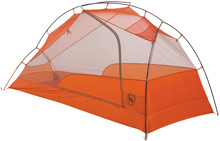
Hey Erik! Great site, thank you! Most of my gear was bought based on your suggestions except backpack (Gregory Baltoro 65) and tent (BA Copper Spur UL1). Planning an 8 day on the CT in three weeks. Frantically trying to lower my weight. A bit scared to change packs so close to the trip, but I can change tents and I like the SoLong. Have you had any problems with condensation running down the sides of the tent? Any chance I could talk you into reviewing my gear list and giving me other suggestions? Thanks again!
@Kenny G: I have had some condensation problems with the Lightheart tent since the head and foot are sort of short and I do sometimes bump into them with my head or feet and knock some water on to me, but no more than other similar single wall nylon tarptent style shelters and only when it’s buttoned down tight in storm mode. It does have two small peak vents which allow some moisture to escape, but the best solution is to just open up one of the flaps (long as it’s not raining) and that usually does the trick to prevent condensation.
Hey Erik. Glad to see you back on this post. I’ve changed my tent to the north face O2 tent. It weighs about 2 lbs 6 oz. So far I like it. It’s only barely longer than a large sized pad, but the ends on it vault away, which is nice for head and foot room. I picked it up on sunny sports for $229. Is a good alternative to big Agnes which is quite a bit more expensive. Just did an overnight at Charles Deam wilderness in Indiana at a total weight about 11.5 lbs. have you ever tried using sleeping bag liners instead of a sleeping bag in warm weather? Cocoon silk mummy liner is about 4.3 oz.
Aren’t you a little big for a 250? Just kidding it’s a swell bike I’ve ridden them before and they work really well in Colorado single track. I carry support kits and supplies for street and dirt, a little collection of wisdom over the past 40 years. Even did bicycle touring for a spell in my 20’s and since then haven’t really looked at high tech camping stuff till I found your web site, thanks for tuning me in.
Been riding the mountains of Colorado off-road with my youngest since he was 8. Fifteen years later and I’m tired of packing a truck. So this year I’ve decided to do dual sport again, but this time with him. So now we’ll need to each carry what we need for the trip ahead. This is where your info will come in handy!
Current bikes owned are KLR, DR 650, ATK 605 (not street legal) Kaw Concours, and am debating on getting a GS1200.
Idaho BDR looks intriguing will have to add that to my already long bucket list
Oh I wanted to ask what GPS if any are you using when off road. I have a Garmin 2730 but want to keep that for street use only
Shinny side up and thanks again!
@Bill: I use my Garmin Oregon for motorcycling as well as hiking… with a power plug wired into the battery and ram mount. Works great when it’s working, but unfortunately the little data/power plug has started to jiggle loose from off-road riding so it’s always trying to switch to battery power. But I think most GPS’s have that same sort of plug. Bad design IMO. Just got back from riding the Utah BDR. Went to Idaho but the whole state was on fire… so did Utah instead.
Eric, on the trail today? Hey totally unrelated question. I gather you ride motorcycles? If so, do you off-road? Your advice on light weight backpacking has given me new ideas for D/S and adventure riding, thanks a heap and maybe someday we’ll cross trails
Wildman
@Bill: Yes I do ride motorcycles! Street and off-road. Motorcycling is my other passion. I have a Yamaha WR250R, Yamaha FZ-07 and a Harley Sportster. Last year I rode the Colorado Backcountry Discovery Route and plan on doing the Idaho BDR this summer. Aside from tools and spares, I bring most of the same lightweight camping gear on my motorcycle trips. How bout you?
I’m thru-hiking the PCT in 2016, and I’m planning on going stoveless. What are your thoughts on no-cook hiking?
@Emerson: I have dabbled in going stoveless and my experience was that it was very convenient. But cold food just does not satisfy after a long hard day of foot-pounding miles the way a hot meal does. Having a hot meal and especially a hot drink, does a lot to boost my morale. But, it’s more of a mental thing than a physical one I think. If you don’t mind it, then it makes shopping and eating much easier.
@Eric – Wow Solong6 looks luxurious @30SqFt! Seems you have a good balance of weight and comfort.
Have you compared space with TarpTent Rainbow? Looks like weight is about the same. Probably comes down to preference of needing trekking poles or not.
Solong6 – 31oz no stakes
Rainbow – 34oz w/stakes/pole
p.s. Went with Nemo Astro Lite insulated pad. I’m also afraid of NeoAir noise, but wanted horizontal baffles. Nice to have so many good options!
@Bret B: I had a Tarptent Rainbow years ago and the space is similar to the Solong. My major complaint with the Rainbow at the time was that the sleeve for the ridge pole was so tight that it took a Herculean effort to get it threaded through the sleeve and the ends poked into the little grommets at the bottom, which made pitching it and taking it down take longer than it should have. But that was the very first version that came out 5-6 years ago, so that may have been improved since then.
Are you still using the lightheart tent?
@Mike Labree: Yes I am still using my Lightheart Solong tent, although I find that I only set it up when the weather is bad. Most of the time I just cowboy camp. I am considering going to a more minimalist shelter (but still with bug netting) for fair weather hikes. I have my eye on the 16 ounce Six Moon Designs Deschutes Plus and the ZPacks 15.4 ounce Hexamid Solo.
Hey Eric, thanks for all your help! The pocket atlas, maps, and information on your site have given me confidence to do the JMT in August, been fired up since January. I have been working out on the local hills with a loaded up CDT and find the straps restricting me from filling my lungs fully unless I push out the straps with my hands. I’ve tried adjusting the straps, but do you adjust them in a certain way? Do you adjust your pack so you more weight is on your hip belt going downhill? Also, when using your chrome dome do you just hold it or have created a mount for the handle so can free up your hands?
@LenO: Are you using the sternum (chest) strap? Sometimes that can restrict your breathing. Try unhooking it or sliding it upward in the channels so that it sort of goes up by where your clavicles are instead of around the middle of your chest. That might help. It’s a matter of personal preference, but I like to carry most of the weight on my shoulders and only tighten the hip belt loosely (or sometimes not at all.)
I’m searching for a new pack, coming off of my 10+ year-old Granite Gear Vapor Trail, and checking out the ULA lineup.
The ULA CDT looks like a great ultralight pack at 24-oz. ULA recommends this frameless “rucksack” (as they call it) for base weights up to 12 lbs and total loads up to 18 lbs. It looks like you fit the base weight recommendation, but how do you manage to carry a typical 26 lbs total load of 5 days of food? What about even longer trail sections between resupplies or long dry stretches that require you to also carry loads of water?
If the answer is that you’re just tough as nails, then just say it. 🙂 I wish my back could take it.
Great article. Thank you!
@Mike: In my opinion, most backpack manufacturers underestimate the total weight they can carry comfortably to avoid warranty claims and complaints. For me personally, I can carry 25-30 pounds in my CDT and it doesn’t bother me. But, if you are worried about it the ULA OHM 2.0 is only a little bit heavier, and it has more room and better suspension. I think as an overall multi-day backpack, the OHM would probably be the better choice for most people.
I’d seen a video on your website where you showed how you packed your backpack. I can’t seem to locate it – can you point me to it?
@Stuart: Here is an article on how I like to pack a backpack:
How To Pack A Lightweight Backpack (Blog)
And this is probably the video you are referring to. This is about five years old so my gear has changed since then, but I still pack it in about the same way.
Lightweight Backpacking Gear Video (Youtube)
Thanks for the list above. Right now i am “trying” to pack for a thru hike on the CT and….well i’ll just say i’m not there yet!!! Base wt still at 23 lbs, but its down from 27! lol Couldn’t really afford all the specific items you mentioned but I am getting there!!
@Charlene: If you sign up for my newsletter (look for the blue signup box at the end of the post) it will send you to a page with a bunch of other sample gear lists, one of which is a budget-friendly gear list with a total cost of $1,000. That might give you some more ideas for less expensive options for reducing your gear weight.
Erik
I’m doing JMT thru this sept. I’m currently using the solong6 for all my southern AT hikes as I usually bring my don and or dog. Love you he tent but thinking since I’m solo on jmt I could save a pound by going with a tarp set up. I’m on a tight 15 day schedule so want to keep lite as possible. I will be using my circuit pack and marmot helium bag. Thoughts on the shelter? Thx…I’m going to order your atlas soon..
@Richard: The mosquitoes are pretty bad on the JMT, so if you do go for a tarp I would choose one that has bug netting attached (like the 16 oz Six Moon Designs Deschutes Plus or the 15.4 oz Zpacks Hexamid Solo)
You helped me so much! I can easily pack a whole house for a moving but it is so hard for me to pack my stuff for just a weekend out. I have no idea what to bring with me on a camping for example and next week I am on camping with my boyfriend. Thank you for the tips!
I appreciate not only the detailed item and weight breakdown, but the cost. Its rare to see someone really be honest about what a full, high quality lightweight kit costs.
Erik, any updates to your gear list for this spring? I added a tarptent hogback, which I’ve used twice now – once with whole family of 4 and once with a buddy. Very lightweight for a 4 person tent. Weighs less than my old north face 2 person tent oddly enough. Didn’t use a ground cloth. Do you ever use one? Henry Shires said you don’t need to use one with his tents. Found a 46 liter outdoor products backpack at Walmart that weighs in at 27 ounces without metal supports and 31 ounces with them. Only $30, so good alternative for budget minded hikers.
I plan on doing about 700 miles of the PCT this summer and have been using your site to compare against my gear list. I figure if I can get within a lb of your weight I’m doing good! Just wanted to say thanks for all the useful info…
Howdy. I am about at the same profile as the above pack weight, base weight etc. I am a bit torn about pack size to make sure I have room for a canister at KM and a bit more food. 1st resupply at Independence Kearsarge Pass. 63 years old, fit and ready. question is how big of a pack to I need, thinking about the Osprey Exos 58. is that too big even with the Bear Can and loaded with food at KM?
@Old Guy: My pack (the ULA CDT) is admittedly a little on the small side and takes some doing to get everything inside. The Osprey 58 should have plenty of room for hiking the PCT, but it’s a bit too heavy for my taste (close to 3 lbs.) You might want to consider a pack somewhere in the middle (like the ULA OHM, Circuit or Granite Gear VC60.)
I’ve been using the ULA CDT since the end of last summer. It is very light. The main compartment is a little on the small side, but you can make up for it using the stretchy pocket. Unless you have a big tent to fit in the main compartment, I think you’ll be fine. I usually backpack with kids and I’ve been able use it and still bring some fresh food to cook over the fire. The water holsters on the sides are surprising big too. They have sinch strings too.
Thanks for sharing your list. I had the Synmat UL 7 and loved it. Super comfortable, packs easy, does not take up much space. I liked it so much that I purchased another one after my a seam busted in the middle of my first one after less then a year of moderate use.
I took my second Synmat on the JMT. Half way through the trail we experienced some bad weather and my pad got little wet. I let it dry on a very clean smooth slab. It was deflated and it had no weight on it. It was the very first time the pad was handled outside the tent. Ever since then it leaked. I found a total 5 holes in it and even after taping them, I still would wake up in the middle of the night to a deflated pad.
As I said, I loved how comfortable it was and I hope you have a better experience. Just be careful. They don’t seem to be very durable.
Gabi: I know the feeling. My old Thermarest had so many patches on it that it looked like it came down with the measles 😉 No pops yet with the Synmat, but I’m sure there will be. If I were a sounder sleeper I’d use a foam pad, but I toss and turn all night. Did you find another pad that you like better?
It might be just a triple crown thing, but on the CDT and PCT you needed to be under 7lbs or 9lbs base weight (depending who you talk to) to be considered ultralight and under 12lbs was just considered lightweight. I’d say cut out one of your pots, most of your “survival and hygiene” gear, use an alcohol stove and you can easily slim down your clothes for any hiking from late may to late september. You’ll probably end up just as comfortable
@David: I have reduced my base weight down to 8 lbs before, and it was just as comfortable to carry (but no more.) I think every person has a point of diminishing returns, beyond which reducing pack weight does not amount to any added benefit. For a smaller, lighter person that point may be lower. But I am 6 feet and 200 pounds so an 11 pound base weight is right in the sweet spot of comfort for me. And it allows me a few luxuries (like a separate drinking cup and fluffy air mattress) that I do enjoy.
Eric, you are truly an expert in your field.
Just saw “wild” last week and finished reading the book yesterday and now this 56 year old is inspired to plan on doing the PCT in a couple of years. It seems to me water is a big concern on doing the PCT. Has the Calif draught in the last couple of years/decade effected the PCT much? Carrying 30 lbs of water through the desert doesn’t sound like much fun!
Thanks for your time
Wildman
@Bill: Water is a big concern on the PCT in the first 700 miles. After that it is not that big of a deal except for a few places. The Southern California drought has affected the PCT and many of the water sources which run in wetter years are dry, which means carrying more water between sources. There are places in Southern California where the distance between reliable water sources is 15 – 30 miles. How much water you need to cover that distance depends on the person, but most thru-hikers get by with a maximum water capacity of 6 – 8 liters (12 – 16 pounds of water.) One of the benefits of carrying a light pack and hiking high-mile days (20 – 30 miles a day) is that you can cover the distance between water sources quicker and carry less water. Many thru-hikers elect to hike early in the morning, late into the evening and even through the night to avoid the heat and conserve water. Night hiking in the desert with a full moon and the crickets chirping is actually very pleasant. Also, it’s important to note that the entire trail through Southern California is not dry desert. The route alternates between mountains, forest and desert, and the long waterless stretches are interspersed with sections where water is more plentiful. The important thing is just to have a good understanding of the water conditions in each segment and pack enough water (and a little extra in case of emergency) to make it to the next water source.
Thanks, Erik
Im going to give the sandisk a try. So..when are you going to do the AT ? i and everybody else would love to see you do it and put out your atlas,books & maps of it. You have such great stuff it would be a shame not to have it for the AT.
When i was researching my gear, i was all over the place spending money on stuff i later found out was too heavy or not good enough. Then i found your gear list !! I have alot of the same stuff , not all , but most. Your list….centered me. Thank you.
On all of the forum i go to, when someone ask about or talks about a gear list i refer them to yours,,,thats all thay need to know !! Very nice job.
I was wondering if you have any tips for flying with your gear. Do you just box it up and check it in as luggage or UPS it ahead. What has worked best for you? Thanks for your help.
Just wondered how that little mp3 player has worked out for you ? still useing it or have you upgraded ? im looking for one and reviews of them are all over the place. Thanks.
@Tramp: My MP3 players usually don’t last long (they eventually get damaged or lost one way or another on the trail) so I just keep buying the cheap ones that run off of AAA batteries. I like that they are easy to replace and don’t require a charger. They seem to work fine for a little audio distraction on the trail but don’t provide great sound or anything.
I didn’t see water purification in your list… did I miss it? I think in the past you have used a Sawyer Mini….
@Scott: For the most part I have stopped purifying my water (not something I recommend others do, just my personal preference.) In the past I have used a Sawyer inline water filter and MSR Sweetwater Drops in the past. Both were lightweight and worked great.
Hi Erik,I’m leaving Springer on a thru hike the last day of February. I’m using a ULA-CDT pack and my weight is running between 28 and 30 pounds.Is this too heavy for pack and do you think it will hold up?
Thanks, Tom O.
@Tom: If that is the max weight of your pack after a full resupply I think you will be fine because it will get lighter as you eat your food. I have carried 30 pounds in my CDT before without any problems.
I recently purchased a REI Lumen sleeping bag to use on the CT during august. Do you think this will provide enough warmth? It is rated to 25 degrees.
@Ryan: I think you should be fine in August with a 25 degree bag on the Colorado Trail. Nighttime temps are probably going to be around 40-ish most nights and might dip down close to freezing occasionally, but probably not much below that.
Great list. I’ve recently been trying to reduce my pack weight and this has been a great guide/inspiration in getting the weight down. Thanks again!
Hey man,
Hope all has been well. I was wondering if you wrap your stakes into the tents stuff sack, or if you keep them separate? I was thinking about ordering a little ditty to put them in or making something really small out of some extra fabric I have lying around. Wanted your opinion on it. I know, super trivial question, but hey grams matter, right?
@Robert: I created a small stake bag out of Reflectix (the bubbly reflective material used for car sunscreens and pot cozies) and duct tape to keep the sharp stakes from poking through anything. This gets rolled up inside my tent.
I’m sorry if this has been asked before, but if your total pack weight is approx 25 lbs, and the CDT, according to ULA’s website is supposed to only be comfortable up to 20 lbs, how does that work? How comfortable is this?
@Bruno: Lightweight pack manufacturers are often too conservative when stating the carrying capacity of their packs, in my opinion. I have carried loads up to 35 pounds in the CDT for short periods without any discomfort. Usually I try to keep my weight around 25 lbs after a full resupply though.
As I am always on a lookout for more advanced and lighter gear, I ran into your blog couple of hours ago.
I must say I’m delighted with the wealth and the accuracy of provided information.
I also admire your patience on answering on all of the questions and also answering the same questions over and over again to those who are too lazy to read 🙂
I am not a huge fan of ultralight because in most cases it means I have to sacrifice solidity of my gear which makes me uncomfortable on the trail so I’m unfortunately doomed to suck it up and deal with those few extra pounds 🙂
Often on my hikes I take shortcuts through the bush and explore “untrailed” (I’m not native English speaker so I hope that this made up word makes any sense 🙂 areas of the route. Most often it comes down to hiking through thick vegetation, climbing or descending wet rocky or muddy terrain or some other similar dangerous ordeal 🙂 Those are the most exciting parts of my hikes and to me are the essence of any outdoor adventure. Where’s the fun in just blindly following the well-marked and groomed trails? 😉
In few of such occasions I got lost for a moment or injured myself, luckily never anything too serious but it was very, very close to becoming so.
Taking all that into consideration, I would absolutely never go out on any hike without these few items I can’t find anywhere on your list:
1. Solid fixed blade knife at least 4” long or at least some solid folding knife with sturdy lockup (anything is way better than Vic Classic which is excellent, but mostly for opening boxes or manicure 🙂
2. Medium to large first aid kit containing some hemostatic gauze (i.e. QuikClot) because out there you are the only doctor for yourself in those first moments and possibly for who knows how many hours more before any help arrives. I also like to pack a venom suction device (i.e. Sawyer Extractor) in case of any serious bites. Although those are controversial because no one knows for sure if they work or not but at least they give you some piece of mind and that comforting feeling you did something to help yourself (or anyone else).
3. Hatchet/axe in snowy winter conditions. Although you can brake branches with your hands and feet for making and containing the fire, any second and calorie counts when you’re tired, wet and hypothermic. Again, anything beats Vic Classic in such situations unless ones priority is being nicely groomed corpse 🙂
I’m really not some macho zombie apocalypse prepper military guy 🙂 and I really like to go out as light as possible but those mentioned above are stuff I can’t imagine not taking on any serious hike so I would really appreciate your opinion and any experiences regarding that.
Thank you!
@Marko: Bushwhacking in remote areas (where there is a higher risk of injury, getting lost or becoming stranded alone for days or weeks at a time) is very different from trail hiking on established, well-traveled trails. Gear such as big knives, hatchets, etc. are unnecessary for trail hiking (which is the kind of backpacking I do and is the focus of this website.) One thing I agree with you about is the QuickClot. I’ve recently added this to my first aid kit after suffering from a couple of injuries (not on the trail luckily) that were difficult to stop the bleeding. I carry the 25g QuickClot Advanced Clotting Sponge. Since it weighs less than an ounce I think it provides good extra security for very little extra weight.
Great info. How do you like Exped vs NeoAir? Any concerns with moisture build-up especially with fiber insulation? You could swap sleeping bag stuff sack with Schnozzel for similar weight/cost.
@Bret B: I only tried the NeoAir briefly in the store before buying the Exped. The reason I went with the Exped was that it did not make a crinkling sound like the Neo Air when rolling around. I like the Epxed so far and haven’t had any problems with it.
The neoair does make some noise I think because of its heat reflective qualities. I have found, however, that once it is fully inflated it doesn’t make the crinkle sound snymore. You have to make sure you get it fully inflated though. Great sleeping pad. I like it better than exped (my son uses) because I don’t slip off of the neoair like I do with the exped. I use the large size too, which I like better than the regular still only 16 ounces.
Erik,
Thank you for the valuable information you are providing. I especially appreciate you including the cost per item. I would like to ask a few questions.
1.) You mentioned that each year you replace each of your stuff / storage sacks. Have you tried cuben fiber sacks instead of silnylon?
2.) You listed 1/2 and 1/4 Pack Towels. What size towel were these before you cut them down? Are you using the 1/4 towel in your cook kit as a dish rag?
@Tim: I haven’t tried cuben fiber stuff sacks yet. Is it better than silnylon? I always assumed it was less durable, but I could be wrong about that. I have switched from the ultralight (nano) version back to the lightweight (ultrasil) version of the Sea to Summit dry sacks since writing this post. Because I rely on these to keep my clothing and sleeping bag dry and don’t use a pack cover or liner I feel better using the slightly thicker version (the nanos were really wispy). For pack towels I cut a piece that is about 4 x 4 inches for my cooking kit (used mostly for drying my cook pot, mug and spoon after cleaning them with water and a piece of brillo pad) and another slightly larger piece (maybe 4 x 6 inches) to use as a personal towel for cleaning feet, etc.
Erik,
I am interested in purchasing the Lightheart solong custom for my AT thru hike.
What fly style and door option did you use when designing your tent?
What made you choose the options that you did?
Thank you for the help, and posting your gear set up. It has helped me with creating my own list of gear, weight, and prices!
Happy hiking!
@Robert: I got two vestibules and two doors on my Lightheart Gear Solong Custom. I chose that configuration after trying the shorter Solo version and the standard Solong with the awning.
The Solo was too short for me (I’m 6 feet tall) and since it does not have the vertical strut poles in the corners it was very close to the head and foot of my sleeping bag, which I figured might be a problem if condensation gathered on the inside of the tent and I bumped into it during the night, knocking drops of water onto my bag.
I did not like the Solong with the awning because the awning was too flappy and acted like a sail in the wind, and when battened down in “storm mode” it still had a lot of loose flappy material that felt unnecessary. Also, I did not want to carry an additional pole to use for supporting the awning.
I like the 2-door 2-vestibule version a lot. It’s roomy and offers lots of options for setting up the flies and doors to achieve the right balance of views, breathability, warmth and weather/wind protection.
Erik, you don’t filter or otherwise treat your drinking water?
Great list, BTW. And thanks for the great Colorado Trail Atlas. It was the 11th essential on my hike.
Cheers
@Bill Pope: I do occasionally treat drinking water using chemical drops or a small inline water filter if the water is stagnant, near cows or too close to town. But I don’t treat water from mountain springs, fast flowing creeks and other apparently clean natural sources. That’s just what I do personally and I haven’t had any adverse affects so far. But the conservative thing to do is treat all drinking water.
In planning a roughly 525 mile thru hike,(75 on the Foothills Trail then 450 on the Palmetto Trail in SC) I wanted to find a hiking guru online. Feel like I’ve found it right here in Erik the Black. I have gotten loads of much needed and useful info. The only good gear I really had was a 65L Northface pack, Zamarlan hiking boots, and a decent rain jacket. Tips on gear, food, and treating feet (breaks) are super. I can’t do exactly ultralight, but I feel good about my choices, and am ready to hit the trail next week. Temps here are still in the 90s/70s, but will hopefully be cooling down in a few weeks. I bought 90% of my gear from Amazon, a few things from REI, and a few things from Backcountry.com. Here’s the main part of my list with a few things not listed…
The Northface Terra 65 Liter(M)4lbs.11oz. $169
ALPS Mountaineering Lynx 1-person tent 3lbs.8oz. $92
Kelty Cosmic 35 D Sleeping Bag 1lb.8oz. $66
Zamberlan Vioz GT Hiking Boots 3lb.8oz. $280
Thermarest Z-Lite SOL Sleeping Pad 14oz. $45
Stanco Non-Stick Cooking Pot 5oz. $9.50
Sawyer Mini Water Filtration Sys. 2oz. $21.80
MSR Pocket Rocket Backpacking Stove 3oz. $40
ACU Boonie Hat 3oz. $10.50
Columbia Men’s Silver Ridge Convertible Pant 16oz. $38
TOAKS Titanium Spork 0.6oz. $9
TOAKS Titanium 450mL Cup 2.7oz. $20
Terramar Men’s Thermasilk Pant 3.2oz. $26.44
Terramar Men’s Thermasilk Crew Neck Top 3.2oz. $22
(2) Terramar Thermasilk Sock Liner 3.2oz(1.6ea pair) 21
Therramar Thermasilk Glove Liner 0.6oz $14
BodyGlide Orig. Anti-Chafe Balm 2.7oz. $15
Camelbak 100oz Antidote Reservoir $26
eBags Nalgene 3-1-1 Travel Bottle Kit $10
The Northface Backpack Rain Cover L 3oz. $18
AJAX Down Vest 5oz. $91
Cool Horizon Crew Short Sleeve 2oz. $23
I haven’t read all the posts but I’m wondering what you do to treat your drinking water. It doesn’t sound like you have enough fuel to boil it and you don’t list a filter or iodine tabs.
@Mary: I usually do not treat my water, but sometimes I pack chemical drops or a small inline water filter. Drinking untreated water is risky, so it’s not something I would recommend for beginners.
Do you need rain pants in late July/early Aug in Sierra Nevada?
@Ben: There is not much rain in the Sierras in the summer. Occasionally there is some precipitation, but it typically only lasts an hour or two then clears up. I always carry a rain jacket (or at least a wind jacket) to keep my chest warm and dry and insulated. Keeping your legs dry is not as important in my opinion. It’s more of a comfort issue than a safety issue. I don’t mind wet legs (as long as the temperature is moderate) so I don’t carry rain pants in California in the summer.
Hi Erik,
First, thanks so much for all the helpful info. I bought the ULA Circuit and took it on my first 2 day trip and it’s WONDERFUL. Fits like a glove.
My question now is…..what’s the best way to dry out one’s stinky day clothes at night? I sure don’t want them ALL in my sleeping bag, as they’re pretty ripe by day 2 (heck, who am I kidding, by the end of day 1)? Hanging them out in the lean to wasn’t a good idea either, as they were quite damp in the morning. Suggestions? Thanks again for all your insights. Heading off for the 100 Mile Wilderness in less tthan 2 weeks and feeling pretty comfortable now.
@Dani: There are some fabrics which are better at staying fresh than others. Natural fabrics are best (wool and silk) because they have natural antibacterial properties. Cotton is no good because it retains too much moisture and can be dangerous since it loses it’s insulating properties when wet. Artifical fabrics are known for stinking to high heaven. I like to wear a merino wool shirt, wool socks and silk long underwear. The only artificial fabrics I wear are Underarmour boxer shorts (which surprisingly do not absorb much stink – probably because the fabric is so thin that it doesn’t absorb a lot of moisture) and nylon pants (which don’t really come into direct contact with any sweaty areas.) At night all my spare clothes go in the stuff sack to use as a pillow, except the boxer shorts which I just lay out in the bottom of the tent to let some air circulate through them. I alternate between two pairs of socks and keep the pair that is not being worn pinned to the outside of my backpack with a safety pin to air out during the day. Those are a few things you can do, but fighting stink on a long hike is an uphill battle. At some point you just gotta embrace being stinky and dirty as part of the experience 🙂
I have a fallow up question to Dani’s. I was considering just washing one set of clothing items and line drying every couple of days. I can use my pack cover as a makeshift wash basin and the biodegradable soap I use for personal hygiene. This will help keep down the stink but is there any down side to doing this? I backpack with my wife and this is more her benefit.
@KP: I would be worried that the clothes may not have enough time to dry before you need to wear them again, but other than that I don’t see a problem with it.
I suggest a 2-gallon ziploc, Add 4 drops of bleach (which I keep as water purifying backup) with a little Dr.Bonner’s. Let soak for about 10 minutes to sanitize and then agitate the bag to “wash”. Do a rinse cycle or two and then wring out and hang to dry.
Just found your site and I wanted say GOOD WORK! I like the way you break down your lists. I’ll be sure to spread the word.
Hi Erik new to this site, am finding it very helpful. I like how you have links to various sites. My question I am attempting to lighten my load when backpacking. I have reduced the weight with much of my gear. I am now looking at packs. The one I am looking at is the ULA Circuit. I like the fact that it has a back vs the GoLite Jam. I have been using the Osprey Ariel 75, which like because it is adjustable while on the trail. Which one would you choose? Thx
@Kathy: I’m partial to ULA Packs myself, so I’d probably choose the Circuit (or the similarly sized OHM) over the Golite.
Eric: I am preparing to do the Wonderland hike this year in August. I am using your gear list as a guide and substituting the gear I have when the weights are close. The overall goal is 25lbs total pack weight. Earlier I asked about your waterproof bags instead of a pack cover. I see that your food bag is not waterproof, how does that work??
Bruce
@Bruce: The Granite Gear Air Zippsack I use for a food bag is not technically waterproof, but it is highly water resistant. It would not withstand to submersion, but you can leave it out in a light rain for a while and no water gets inside. My food is also packed in ziploc baggies, so if water did make it inside the zipsack it would still stay dry.
How well does your new exped pad work as pack suspension compared to the prolite you used to use ? I prefer to carry most of the weight on my hips and just use the backpack straps to balance the pack. This worked fine with the granite gear vapor – but they quit making that one 🙁
Also, are you noticing any durability differences between your new pad and your old one ?
How about long term water resistance between your new rain jacket and your old one ?
@Johng10: The Exped works well as back-pad suspension if you blow it up partially. I fold it up so that the valve is at the top, then put all my gear in, then give it a few puffs until it stiffens up and close the valve. The material on the Exped is definitely thinner than the Prolite was, but I haven’t gotten any punctures so far. I haven’t used the new OR rain jacket in the rain enough to make any long term observations, but it has worked well in the handful of showers I have been out in so far.
Eric: Since you use the dry sacks then can I assume you don’t use the CDT rain cover?
@Bruce: Yeah I do not use a rain cover.
You are still using the 13L dry sacks? I also use a CDT and have been getting into hammock camping (still on the UL side though). That said I now have a top quilt and an under quilt. My hammock is MUCH smaller than my tent so all in all it seems like the space is fairly even. That said we just spent an extended weekend in the Sangres in CO so I took my 30 degree setup and in the sacks that come with the quilts (no compression) they are big and round and bulky (took up more than half the back). So I’m looking for ideas. My first thought was compression sacks but I hate to smash my gear like that (and add the weight of the sacks). What i’m wondering is
1. How do those 13L sacks fit in your CDT (I’m thinking i will need 3: TQ, UQ and Clothing).
2. Do they lay longways in the pack? How high up the pack will 3 full fill if stacked?
@Joe: Yes I still use the 13 L dry sack for my sleeping bag and an 8L for my clothes. I use a zipsack for food that is about the same size as the 13 liter (maybe a bit larger). They fit perfectly in the CDT when laid down horizontally. I keep my sleeping bag at the very bottom, food sack in the middle and clothing and cookset on top. If you just used the 13 liter dry sacks you could fit 3-4 of them stacked horizontally in the the CDT.
Can the new ULA back pack roll up into a ball?
I have an osprey, but I would have to do damage to it, to condense it into a sack. I plan to hike and then bike, and I want to be able to stuff the backpack into a pannier… Thanks
@Dan: The ULA pack I use (the CDT) is the smallest and lightest in their lineup, and it does not have any built in suspension or hard parts. So it can be rolled up and compressed without doing any damage to it. The larger ULA packs have built in suspension components which would prevent them from being rolled up. I do not know if they are removable or not.
Quick jacket question for you Erik. The OR Helium II gets very high marks for functionality “for the weight”, but I see a lot of people qualify this with “it’s a just-in-case jacket, but not made for serious rain”. What happens if you get caught by an unexpected storm – have you found the Helium is suitable? Do you ever pack something more robust?
@Lange: I have not had a chance to use the OR Helium in much rain yet. But it has similar features to my previous lightweight rain jacket, the Marmot Mica. I used the Mica for a couple of years and my experience was that it worked very well the first season on the Colorado Trail, where it rained heavily every day, but only for an hour or two at a time. In the years that followed the Mica started to degenerate and would soak through much more quickly. I replaced it with the Helium because some people said it is more durable, but I haven’t had it out in enough rain yet to test that. In the handful of storms I have been out in so far it has worked well.
My philosophy about hiking in the rain is to avoid it whenever possible. If it rains for more than a couple of hours I usually stop and pitch my shelter and wait until the storm passes. So I really only need my rain jacket to keep me dry for a couple of hours at a time. Since I do most of my hiking in the western U.S., where rain is infrequent and brief, I can get away with this. I imagine a lightweight jacket like the Mica or Helium could start to leak if subjected to heavy all-day rains for many days at a time. If you hike in a very wet climate it might be worth spending a few more ounces on heavier duty rain gear.
But if you do most of your hiking in a dry climate, it is more economical to carry minimalist clothing and use your shelter as the ultimate insurance policy against occasional bad weather. If you go this route, it’s just important to pay attention to the weather and know when it is becoming too much for your clothing, so you can stop and warm up in your shelter, instead of continuing to hike through bad weather and risk hypothermia.
Thank you Erik, that sounds sensible. Most of my backpacking is (was) in the Sierra Nevadas and storms usually only last an hour or two (despite dumping pretty hard when they arrive!).
I live in Australia now, and my walks are sometimes in wetter climates than the Western US. I notice that you don’t list a heavier duty rain jacket with your “part-time” gear. Do you have a suggestion (best additional performance for least additional weight?). I’ve heard the OR Axiom recommended…
@Lange: The Axiom looks like a very nice jacket, although quite expensive. It may be worth it if you’re going to use it a lot. If you want to try something cheaper, the Marmot Precip is an old standby and very inexpensive (13 ounces and about a hundred bucks). I used to have a Precip years ago. My main complaint was that it was not very breathable and got clammy inside. I believe the design has been updated several times since then (I had mine in 2006), so the new version is probably improved. I know a lot of people use it and it gets good reviews online.
Thanks for all this info, Erik- I just stumbled onto your site and find it very helpful.
I see that a lot of your clothing is relatively simple and inexpensive stuff, though still quite light. But most clothes made for non gram-counters don`t have weights listed by the manufacturer or by the vendors. If buying locally, I guess you could always trot into the store with a scale in hand, but when ordering, do you just guess how heavy something will probably be? Often not much in the way of description to even assume that information. Or for stuff you can`t personally grope, weigh, or examine before hand, do you buy mostly after reading other peoples` experience with the stuff?
I also notice that you (along with many other people) don`t count the weight of “worn” items on yoru gear list. The lists are still helpful, but why is it that things not in or on the pack are so often not counted?
@Brian: I live in a small town in the mountains where there are no local gear shops, so I buy a lot of stuff online, try it on, weigh it, and return the stuff I don’t like. Sometimes I’ll buy gear, test it out for a season, and then if it’s still in good condition, sell it on Ebay. I like to test by trial and error and then make small refinements and adjustments over time.
Some online retailers which cater to backpackers (like REI) do list the weights of some of their clothing items though, which is nice.
I don’t count the weight of worn gear like clothing because it is evenly distributed over my body and the weight is not very noticeable compared to pack weight, which is concentrated all in one place and hangs off my body away from my center of gravity where it has a bigger impact on comfort and stability. Some people do count the weight of everything though, and they refer to this as “skin out weight”.
Erik:
Was reviewing your sacks, and have a fast question. In your food sack, Are you just carrying food, or everything that you have listed under that category. Wouldn’t it be prudent to just carry food, and have an extra sack for the other items, that way you can just tie the sack to a tree high enough that bears won’t be able to get to it, instaed of buy a bear cannister.
@Bob Ferguson: The only thing in my food sack is food (except occasionally I may stick an extra fuel canister in there if needed). There is a strap on the side you can tie a rope to and hang it. The only place I carry a bear canister is on the John Muir Trail where bear canisters are required in some parts. I don’t believe that hanging is an accepted method of protecting food from the bears in that area. I’m not sure why, but I think it is a combination of wanting to protect the trees from being abraded by ropes and knowing that many people are not very competent at hanging food, so the bears might still get to it.
You carry a Schnozzle for your Exped?
@DanS: No I don’t carry the Schnozzle. I just blow it up with my mouth.
Your website is awesome! Thanks so much.
Question: I’ve never sealed my tent, and never had a problem. But I just read something that said you should always seal your tent. I I just splurged on a Big Agnes one man and am wondering if I should. Any thoughts on this?
@Ed Cahill: Usually you need to seal tarp-tent style shelters because the ridgeline is only sewn together and water can drip through over time. But, I do not believe you need to seal tents from mainstream manufacturers (like Big Agnes) because the seams are usually already taped from the factory.
The list and weight is inspiring. I have not gone ultralight yet, but planning on it this summer to allow us to camp with our toddler.
I like the MSR stoves but was thinking about throwing in an alcohol stove to drop weight even further. I guess it depends on how long of an outing we will be putting together. Thanks for the info.
Surprised that you don’t use an alcohol stove. Why a canister?
Also, no trash compactor bag liner? I guess since everything is in a S2S nano that makes packing simpler. You do have to be more careful to fully seal your sleeping bag sack though.
Do you put your puffy in your clothes bag? I’ve be thinking about a separate S2S nano for this since I often wear my puffy in the morning then want to quickly stash. I’d hate for it to get soaked sitting on the top of my pack unprotected.
@DanS: I prefer a canister stove over alchohol because they are more efficient and wind resistant. And when you factor in the weight of liquid fuel required to cook two hot meals a day there is no real weight benefit of an alcohol stove. I carry two dry sacks. One for my sleeping bag and one for clothing. Normally I carry all my clothes inside the dry sack (which is at the very top for quick access) but if I want to have something handy, like the puffy vest, I’ll just stuff it in the big stretchy front pocket on my pack (as long as the weather is good). If it starts raining my dry sack for clothing is right at the top, so I can quickly throw it in there.
Erik… Great list! I’m interested in how you like the ULA CDT. I am looking for a summer pack to use in the Southeast, and am looking at either the ULA CDT or the OHM 2.0. I already use the Circuit for my 3-season pack and family outings with children, but for solo use, I would like a smaller pack. My base weight is now down to 6.5 lbs. Any help would be greatly appreciated!
@Brooks: I like the CDT very much. Before this I used it’s predecessor (the ULA Conduit) so this has been my main pack for quite a few years now. The main thing with the CDT is just that it is small, so you gotta make sure all your gear and supplies will fit. If it will hold everything you need, then the CDT is great a great pack and really light. If you need a little more space the OHM is probably a good middle choice. I have not tried out the OHM yet, but I am considering buying one to use on trips with 10+ days between resupplies so I can carry more food.
Do you carry a watch or a Cell phone? Is carrying a satellite “SPOT” worth its weight? I use a G-shock but am considering the Suunto, any thoughts? On the AT a cell phone is a decent multi purpose item. Any ideas on Solar/Kinetic/piezoelectric Battery chargers?
@GordonD: These days I do reluctantly carry a cellphone, but only so that I will have it with me in towns so I can check my email and deal with business concerns. For strictly personal reasons, I wouldn’t carry a cell phone. There usually is not any reception in the places I hike and the battery life is too poor to use any of the various functions (like camera or listening to music) for very long.
I carry a spot on my off-road motorcycle trips because I feel that is a much more dangerous activity than hiking with more of a risk of becoming injured or stranded. But for hiking on established trails (like the AT or the PCT) I don’t think it’s really necessary. If I were to go hiking in the back-country of Alaska or the middle of the Mojave Desert along a rarely traveled route, I would bring the SPOT.
I do like to carry a watch sometimes if I’m trying to maintain a schedule and get a certain amount of miles done in a set time. It seems to me that most portable solar chargers do not produce enough juice to justify their weight.
We have been considering the new Iridium Go, at 4.5×3.5 inches. It’s new so I haven’t seen a weight on it yet. It basically creates a connection for your cell phone making any cell phone a sat phone. We’ve never carried one before but my parents are considering it for a month long trip in greater slave lake and I’m wondering if it might be a useful tool. In Alberta we sometimes wind up pretty far back country and there are a fair few grizzlies around. Although you’d be lucky to survive an attack long enough to make a call! Have you ever carried a Sat phone Erik?
@Carissa: If you are going to be somewhere far out where you would not have any other way of getting help in case of an emergency I think a sat phone attachment could be a good thing to have. I have never used a sat phone myself, but I do occasionally carry a SPOT GPS locator if I am hiking by myself somewhere off the beaten path and on off-road motorcycle trips. Never had to use it though, so can’t say how well it works.
So I bought a Mountain Hardwear thruway 50 bacpack which is frameless and uses a removable 3/4 pad for support (like how you use your neoair). Even at only 15 lbs and packing according to your post, it is sagging in the middle pretty bad. I noticed your picture does not show sag and you are at 25 lbs. Is there a trick?
Also, I was thinking a stiff sheet of plastic in place of the 3/4 pad would maybe help? Thoughts on that as a DIY? I don’t use a pad as I hammock camp.
Thanks!
@JC: Depending on your specific gear it may be necessary to re-arrange it in a different way than I pack my stuff so that it fills up the pack better. Sagging can be caused by air gaps between gear which allow things to shift and roam around, pack straps not being adjusted snugly enough, or a back support that is not stiff enough.
I like to pack my pack so that everything inside fits together like a puzzle really tight and there is almost no room for anything to move around because it is held in place by everything else. As the pack begins to empty out (like by eating food) I try to fill up any empty space by taking my tent out of the stuff sack and letting it unfurl in the bottom of the pack, or doing the same with a sleeping bag or clothing (as long as its not raining). If you find that your pack is bending in the middle, try packing something long and stiff (like a tent in stuff sack) vertically. Sometimes when gear is packed horizontally, like I do, it can create a crease right in the middle of two big items where the pack can fold over.
I have found that foam pads by themselves do not provide as much back-pad stiffness as an inflatable pad. What I do with my inflatable pad is I fold it up so it fits in the back area, leaving the valve at the top, and then fill it up with a couple of puffs of air until it becomes quite stiff and really squishes all the rest of the gear in place. If you can’t get your pack to work with no frame, rather than doing a make-shift frame sheet (which is probably going to be heavier than you want if made from common materials) I would just go with one of the packs which already have a minimalist pesudo-frame built in to them (like the ULA Circuit or OHM.)
I ended up taking out the foam pad and cutting a piece of corrugated plastic to put in its place (there is a sleeve for it to slide into on the pack). The plastic I used came from one of those gigantic charity checks (same as a political sign). You just have to make sure the corrugated tubes are going up and down on the pack and not horizontally.
The foam pad was 4.2 oz, the corrugated plastic was 4.2 oz. Nice and stiff. Works great!
Hi Eric,
Am loving your lists and tips. We are beyond excited to eat KD on the west coast trail this summer (why didn’t I think of it before!). Am wondering why you chose the golite chrome dome over the collapsible golite trekking umbrella? Is it just the weight difference? 8vs 11 ounces
Thanks, Carissa
@Carissa: When I bought my Chrome Dome I think it was the only model with the reflective material. Since I do most of my hiking in the west I use it mostly for sun protection as opposed to for rain. I see that the Collapsible Trekking Umbrella is now available with the reflective material so that would work just as well, but since it is two ounces heavier I would still choose the Chrome Dome.
have you seen any head mounted light weight umbrellas, the type that sit over your head/hat?
@Dylan: I’ve seen em at ball games and the beach but never thought about it for backpacking. Might be a good idea. Thanks.
Eric:
I went with the ULA Air X pack becuase it is customized to your torso. I like the idea where you separate all your items in stuff sacks. Had to buy them now I see where you are going with them. Also purchased the Toaks Titanium Pot and mug compred to the Evernew, Was looking at the pricing. Thanks for your site. It gave me some ideas that I didn’t consider, and keep it up. Bob From Alaska.
I don’t see any water filtration or chemical treatment in your kit. Im assuming you dip and sip?
Andrew: If I’m hiking in the mountains where there are nice springs and streams coming out of the ground I do not treat my water (which is most of the time). If I’m going to be hiking in the desert or somewhere the water is likely to be stagnant or contaminated by livestock or otherwise gross I do carry some form of water treatment (usually either chemical drops or a small Sawyer water filter that goes inline in my drinking tube.)
I bought the northface hightail 2s long. Might be trying it out in some cold weather in Indiana this weekend. Tried sleeping in it in our three season room around 55 degrees and was plenty warm. So far very pleased with the bag. I’ll report back after my first use if you like.
Erik, love the website.
I think you’re underselling your list by showing “Total Pack Weight.” Consider in the future listing this as “Maximum Pack Weight (Typical)”. Then also show a line for “Average Pack Weight (Typical)” which is your base weight + HALF of the fuel/water/food. For your list above the Average Pack Weight would be 20.5 lb. I say this because it is sensible to shoot for an average pack weight of about 20 lb, which yours is.
Sorry, should have clarified. It is a great backpack (Boreas Buttermilk 55) that is normally just as much as as the OHM 2.0 and got the Editors Award from Backpackers magazine (not that I know how much weight to put on that – so to speak). I just happen to have found a great, great deal on it locally.
I just trying to figure out for myself if 18 oz was worth $135. I have my general weight down to below 35 lbs for the trips I tend to go on because I hammock camp, but ever ounce counts on my back.
Thanks! FYI, like others have said, this is a GREAT site!
So what is your personal opinion on how much to spend on an ounce of weight? By way of example, I have an opportunity to get a brand new internal frame 55L pack that is 3 lbs dead even for $65. The Ohm 2.0 is just under 2 lbs and is $200. (Assuming the quality/fit is just as good.)
Just curious what your judgment call is on price vs. weight balancing. It is the law of diminishing returns. I deal with this and mountain biking.
@Chris: I think when it comes to major gear items (backpack, shelter, sleeping bag & pad, clothing) it’s better to buy higher quality gear that is lightweight, comfortable and dependable than cheaper, heavier items. These few items form the foundation of your entire gear system, and when choosing these items you have the opportunity to make the biggest impact on your total pack weight (you can save pounds instead of just ounces.)
Beyond a certain point, cutting a few more ounces here and there does start to offer diminishing returns. For me, the sweet spot is 25-35 pounds of total pack weight (including food and water). As long as I can keep my pack in that range I can hike all day with a smile on my face. I am willing to spend as much money as it takes to get down to within that range, and not a dollar more to go beyond it (since I have gone lighter in the past and found that it did not increase my comfort or enjoyment.)
Erik… two questions. What did you do about having a bear canister in California (Yosemite and Sequoia Kings Canyon)? Also, on longer hikes, what method do you use to wash out your clothes (especially socks and underwear) on the trail. I’ve never hiked long enough to have to worry about that. Thanks for the information.
@Brian: I carry a Bear Vault Bear Canister in places where they are required. I strap it horizontally to the top of my backpack since there is not enough room for it inside. I don’t typically wash clothes on the trail, but every 5-7 days I go into town to resupply and wash them at the laundromat. If my socks get really crusty I’ll sometimes rinse them out in a stream. I carry two pairs and alternate between them, so they each get 2-3 days of use between washing.
Hi Erik-
How did your OR Helium II perform this past season? I’m in the market for a UL rain shell and the Helium is on my short list. Thanks!
@Tim: I’ve only used the OR Helium II in a couple of rain storms so far. Nothing really heavy or prolonged. So far it works well. It feels very similar to the Marmot Mica I had before it, but I’m hoping the OR lasts longer.
Eric,
How can you sleep in the Marmot Helium in the summer time?
Isn’t it too warm for you?
Thank you!!
Great website.
@Chris: In the summer I unzip my sleeping bag and use it like a blanket. When it’s warm I stick my feet out, roll the top down around my waist, or if it’s really warm just lay on top of it.
has anything been invented to take care of potty needs. being on the sunset side of 80 squating over a hole is no option for the bride and me.
thanks….bob
@Bob Erwin: I don’t know of any gear specifically for that. But some hikers like to use a downed tree trunk – just dig a cathole behind and it squat over it (so you’re basically sitting on the trunk with thighs and your butt is hanging off the back). That takes the weight off your knees and makes it easier to get back up again.
If you can’t find a tree trunk another method is to squat normally but hold onto something in front of you for support (like a tree branch). The problem with the second method is it is kind of precarious. Maybe instead of holding with your hands you could wrap a piece of clothing around the branch and hold onto the ends for a better grip.
Something like this Collapsible Portable Toilet would work well for car camping trips, but is probably too big and bulky for backpacking.
Erik, what a great site this is! The gear list and the food list are well organized and easy to follow, as is all the site. I just starting backpacking this fall at age 57, with one balance nerve working (after removal of a brain tumor) and a couple of other physical issues…which create a few challenges. So I have found that ultralight hikers provide excellent suggestions. I was thinking about the idea of an alcohol stove, but you are the 2nd person I’ve seen that recently has blown them off and gone to a cannister stove. You brought up some really good points about them so I think I will just stick with my pocket rocket. I really do like it. Thanks so much for bringing up the cons!!
Erik,
Your site/lists are awesome. Try these pop tops for your water bottles. Nice cuz ya don’t have to worry about dropping the lid every time you want a drink. When wearing gloves you can still open the pop top with most gloves, or just use your teeth!
http://www.cascadedesigns.com/platypus/platy-accessories/push-pull-cap/product
Also, works well for irrigating wounds or adding just the right amount of water when measuring for cooking vs: pouring from the open bottle.
@Count Oz: Do those Platy pop tops fit on 1 qt water/soda bottles as well as the Platypus bottles?
Erik,any problems with punching holes in the synmat ? I thought about useing a gos.gear.1/8″ccf pad under mine for protection and keep it from sliding around on the tent floor but i dont know if the 2.5 oz weight and more to pack up is worth it . Tks.
@Tramp: Haven’t gotten any holes in the Synmat yet, but I did pop my Thermarest a few times over the years, so I’m sure it will happen eventually. I carry a patch kit just in case.
Have you made any changes to things you bring? My list is very similar save for a couple different items. Also, I’m debating bringing a portable battery charger. I’ve looked into options such as Mophie and Ankor, but not sure if I’ll use it enough. Most are close to 1lb.
@Rob: I don’t plan to make any changes to my gear this year. Everything on this list is working well so far.
In my opinion, electronic devices are a luxury at best (and a distraction at worst). If you use them infrequently enough you can recharge your batteries during town stops and not have to worry about packing the pound of extra weight for the portable charger.
I’d like to see a video of your method of packing this stuff! Also, if you don’t mind sharing, how small do you suppose that Helium bag packs down? I just purchased a Granite Gear Leopard, and am in immediate need of a new sleeping bag. Really want one that is fairly light and compresses fairly small. I am a fan of your site. Its become a goto for me and my 4 oldest kids. (14yrB, 13yrG, 12yrG, 10yrG) We have been hiking for the last couple years and we are beginning to get the bug for really lightening our loads, (esp. mine:)). Thanks for the helps!!
@Scott: Here is a link to a post showing How I Pack My Backpack. (I’ve made a few minor changes since that article was written, but my packing technique is mostly unchanged.)
The Marmot Helium fits into a Sea To Summit Ultrasil 13L Dry Sack (the green one in the picture above) which I stuff horizontally at the very bottom of my backpack (to provide a soft cushion for the rest of the gear to ride on top of.)
This website is great, thanks for sharing all of your information! I had a question about the Marmot Helium. On their website the weight is listed at 2 lbs 6oz (38 oz) and the fill weight is listed as 21.5 oz. You have it listed as 31oz. Is this a different version of the bag? Here is the link http://marmot.com/products/details/helium
Thanks again for everything. I’m planning on hiking the CDT in a month or so, and your site is the bees knees!
@Dan: There may have been some revisions to the Marmot Helium since I bought mine four years ago and it could have gained a couple of ounces in the process (or that weight may be for the long version). But I am pretty certain it was right around 2 lbs when I got mine.
I am just now getting back into backpacking now that my son is old enough to go with me. Was looking to dump my brick Gregory bag when I found this awesome site. I was wondering about you take on your current bag vs the 50l Jam GoLite. The price is a touch less, which is no big deal, but the big thing is while the weight and space is similar, the Jam has an internal frame. Am I just stuck in the 70’s Backpacker magazine ideal like your shoe blog mentioned, thinking it is crazy not to have a frame.
Anyway, why your pick over the a Jam? Is it not as durable?
Thanks!
@Chris: My total pack weight is typically only 20-30 pounds so I don’t really need any sort of frame, though I do create a stiffer “backpad” by placing my folded sleeping pad (partially inflated) inside the pack. If you expect your total pack weight to be more than 30-35 lbs a pack with some kind of lightweight internal internal suspension system can help keep your load from sagging and transfer some weight to your hip belt for more comfort. The Golite Jam is a great pack in the 2 pound weight range. The ULA OHM is another option with similar features and weight. My ULA CDT is not really in the same class as those packs. It’s more of a minimalist frame-less rucksack that requires careful attention to be paid to get everything stuffed inside. I’d recommend those other two packs over mine for someone just starting out, because they can carry more and will give you more room for trial and error while you work out the rest of your gear.
Thanks! The choice may be made for me. The GoLite large is actually fairly small (19.5-21.5″ torsos). The ULA large frames are for 21-24″ torsos. I am only 6’1″ with a 22.5″ torso. GoLite’s must not be made for people 6′ and over. This is from ULA’s site:
Pack Size: Torso Length: Hiker’s Height:
Small: 15″-18″ under 5’6″
Medium: 18-21″ 5’6″ to 6’0″
Large: 21″-24″ 5’10” to 6’4″
Stinks though because the Jam is half the price!
GoLite is not made for short women either (5′ 1″). I am 16″ torso, could not get the shoulders to fit no matter how much the sales clerk and I adjusted it.
Hi Erik-
I’m looking at the ULA CDT. Couple of questions: 1) I generally am right around 22 pounds with food and water, BUT, am wondering how it would do with between 30 and 35 pounds (think PCT in the Sierras with a bear can)? 2) what are your thoughts on the Cuben version? Getting it under 20 ounces is tempting. The $100 cost for the Cuben still puts me $120 less than the Z-Packs Arc Blast! Thanks
@Tim: The ULA CDT holds up well carrying loads in the mid 30 pound range, so you should not have any problems carrying water in the desert and bear canister in the Sierras on the PCT (as long as you don’t go much above 40 lbs total). I’ve carried heavy loads in mine many times and it is surprisingly comfortable for a frame-less rucksack. I do not trust cuben fiber as a material for backpacks because it costs more, decreases lifespan and durability and only weighs a few ounces less. I don’t see any real benefit to it.
Erik, I teach a class on putting together a 72 hour emergency kit I have used a lot of your information in putting my own kit together to make it as light as possible. I would like to know if I can send a link to this page out in an email I give to those who attend my class in order for them to read for themselves all the great advice you give in your blog. Thanks for all your hard work.
@Vicky S: Thanks, feel free to share the link to this page with your students.
This might have been ask before but that zip sack you use for your food bag,will that handle hold up for hanging i.e. bear bag ?
@Roger: The nylon loop on the Granite Gear Air Zippsack is sewn into the seam, so it should be strong enough for hanging.
Erik:
How long does your fuel cannisters last and what is your resupply strategy for fuel cannisters on the PCT
@Michael: I can usually squeeze 5 days out of a 4 ounce canister, cooking dinner every night and a few hot breakfasts. I boil water, simmer for an extra minute or two, then turn off the stove and transfer pot and food to a pot cozy to continue cooking. I’ve had good luck buying canisters in towns and scrounging from hiker boxes throughout California. Canisters are a bit harder to find in OR and WA. I switch to the larger 8 oz canisters and occasionally put canisters in with resupply packages for the smaller towns. Canisters can be sent through the mail as long as they are sent by ground and marked ORM-D.
Hi Eric. I really like your site. I wondered what your opinion was on the north face hightail 2S sleeping bag. I liked the weight and compressibility on it.
@Scott: I have not used the North Face Hightail 2S. From looking at the specs on the website it looks like it would be a good summer bag. I do not trust the temperature rating of 35 degrees. Manufacturers tend to exaggerate the temperature ratings on these minimalist sleeping bags. One way you can tell how warm a bag will be is the fill weight (the weight of the down insulation). TNF doesn’t list the fill-weight for this bag, but considering it’s very light overall weight (1 lb, 4 oz) I’m guessing there is not a whole lot of down inside. I would think this bag will be warm down to around 50 degrees. That is just my impression from looking at the specs, but I could be wrong. If anyone has any experience with this bag, please feel free to post.
I used it in march at the hoosier national forest. It performed very well even down to 27 degrees at night. I had to draw the hood around my head and wear a jacket and pants, but then I was toasty warm. Have since used it in warmer weather too and I’m very pleased with it. It’s warm when you need it and then if you want to cool off it has a zipper vent you can open at your feet. At 1 pound 5 ounces I really am enjoying it. Used to have a square nf bag, but so far I’m getting used to it fine.
Erik:
What do you use to dig your cat holes deep enough
@Michael: I use the end of a trekking pole to dig cat holes (I always remove the snow baskets from my poles.)
Yea…im starting to come around on the cannister stoves. I will give the pocket rocket a try. Also there are lighter sleeping bags and i see you use the marmot helium. Must be a big fan.
@Tramp: I tend to go a little light on clothing so that’s why I go with the heavier sleeping bag (15 degree when a 20-30 degree bag would work most of the time). It’s my security blanket in case the weather turns bad and I need to retreat into my shelter to warm up quickly.
Eric,
Why did you go with the evernew pot&cup over snowpeak or even fosters can set ?
Also, why the cannister fuel and pocket rocket over a penny stove and heet fuel ?
Dont get me wrong,,,i like your list! A lot! Just trying to get a handle on your thinking. Tks.
@Tramp: I used to carry a 700ml Snowpeak mug for cooking. I liked it but there wasn’t enough room for some of my larger dinners. I got the Evernew pot because it’s bigger and the mug fits inside the pot for easy packing. I’m not a fan of alcohol stoves. The weight of liquid fuel combined with pot stands, windscreens, simmer rings etc. nullifies most of the weight savings vs. a canister stove, and they cook poorly and the fuel stinks. Cooking with my canister stove is hassle-free. Just turn the knob, light the flame and go. The only thing that sucks is the spotty availability of fuel canisters in some places.
Erik–your site is amazing. Thanks for all the great info and help. I’m getting back to backpacking after a 3 year hiatus due to 3 knee surgeries and want to dramatically drop weight. Do you have a recommendation for a 2 person tent option? I’m 6’3″/200. While I sometimes head out with my wife (5’3″/120), my more typical backpacking buddy is 6’2″/200, so we need length and width but I want to go as light as possible. Am willing to splurge on price. Thoughts? Thanks much!
@Randy – I have the Tarptent Stratospire2 and love it. I’m 6’1″ 185 and my buddy I hike with is close to the same size. Haven’t used it a ton as we have gotten into hammock camping (thinking about selling it actually) but the size will probably be great for you. Weight on it is outstanding at around 2.5 lbs and that is for a two piece setup. Full exposure if you don’t need/want the fly and can setup for 4 people if you lose the net (3 person setup available in the net but it would be tight).
@Randy: Here are my favorite 2-person lightweight backpacking shelters:
Lightheart Duo (Weight: 36 ounces, Length: 101″, Width: 55″, Height: 42″)
Six Moon Designs Lunar Duo (Weight: 41 ounces, Length: 90″, Width: 54″, Height: 45″)
Tarptent Double Rainbow (Weight: 41 ounces, Length: 88″, Width: 50″, Height: 43″)
Erik – I just read this entire thread while on a plane searching for the best and lightest gear for a 5 day trek I am going to be doing with the girlfriend to Patagonia. (I am a newbie to this and have only done one 4 day trek in Peru – but we had
A few quick questions:
1) Do you use a rain cover for your pack or rely on the stuff sacks to keep things dry?
2) I am packing for 2 people (tent that is + some food so she doesn’t have to carry it all) and have the NorthFace Mountain 25 (had it for a little while) and it weights 9+lbs) – so knock off 9+lbs right there. So I was looking at your pack and the Circuit. I plan to do more of these hikes and don’t want to order something too large or too small, especially if I do more…I am leaning toward the circuit (thoughts)?
This blog is AWESOME by the way…I am sure I will have a few more questions for you over the next few days as I buy supplies…
Thanks for ALL the tips!!!
@MikeC78: I don’t use a pack cover myself because my sleeping bag and clothes are in their own waterproof sacks. I pack food inside of ziploc baggies and then it goes in a water resistant sack in the middle of my pack. It works well and I’ve never had any gear get wet. A pack cover is another option that will work too. I just never liked them because of the extra step of having to put it on when it starts raining.
I think the ULA Circuit and ULA OHM are a better pack choice for beginners because they are larger and the extra room will be useful when you are still going through the trial-and-error process of figuring out exactly what gear works best for you.
The ULA CDT works well for my needs, but it is a small pack that has just enough room for my gear and supplies and not much else.
Like the Granite Gear Air Zippsack idea. Easy access and fits in the pack well. My question is the Zippsack waterproof enough to be hung in black bear country or do you not hang your food?
Thanks for all the great ideas
4-iron
@4-iron: I don’t hang my food very often, but the Zippsack does have a nylon loop on the side from which you can hang it. It has a zipper similar to a rain jacket so it is highly water-resistant, but the seams are not sealed so it is not completely water-proof. If you pack most of your food inside Ziploc bags, as I do, I would not have any reservations about hanging it outside in the rain.
Hey Erik thanks for all the good info.I’m trying to decide on LH Gear tent or Tarptents Moment.I’ve been using Tarptents Contrail for years.If you or any readers have info on the “Moment” please reply.
Erik,
Could you comment on your reasons behind choosing the ULA CDT and if you had considered the UHM 2.0?
@Rob: I chose the CDT because it weighs less than the OHM and has enough room for all of my gear. ULA’s different pack models are all pretty similar in design, materials and construction. It’s just a matter of picking the one that is the right size for your gear. The CDT is good for ultralight compact gear and a total pack weight of less than 30 lbs. The OHM and Circuit are both good mid-sized packs for total pack weights of 30-40 lbs. And the Catalyst is a beast with room for everything, including the kitchen sink.
Planning to hike the JMT next summer and this will be my first time with a bear canister (don’t even own one). Planning to do 25 miles per day so looking to do it with 8 days worth of food (16-20 lbs). Looking for the lightest canister possible (hate that I have to blow base weight on it). Can you give me your top recommendations?
@Joe: I believe the lightest bear canisters available are the Wild Ideas Bearikade Carbon Fiber Canisters.
Erik,
Your thoughts on the better bag:
Marmot Helium 15 degree $295 versus the
Montbell Super Spiral # 1 for $275. I move around while I sleep and don’t like sleeping on back. Don’t like tightness around knees and lower so Montbell appeals but read bad reviews about hood. Prefer some feedback from you or anyone else that’s used the Montbell and I know you currently use the Marmot.
Thanks
@Patrick: I have not personally used the Montbell Spiral, although I have heard they are good. Here are a few things to consider:
– The Montbell #1 is rated at 25 degrees and the Helium at 15 degrees. Since most bag manufacturers overstate their temperature ratings I usually subtract 10 degrees from what they claim. If you are planning to hike in early spring or late fall the Montbell #1 may not be warm enough. If you only plan to hike in late spring, summer and early fall it will probably be fine.
– Montbell (being a Japanese company) has a different sizing scheme than other manufacturers. With most sleeping bags the regular size fits up to six feet tall and the long size is for taller people. With the Montbell the regular size only fits up to 5’10” before you have to switch to the long size (which means a few more ounces of weight.)
Because I am six feet tall and I sometimes hike in the early spring and late fall I went for the Marmot. But as long as the temperature range and the size are right for you, the Marmot would probably be a good bag. And I have heard that those stretchy baffles are very comfy.
Hi Erik. Thanks for the updated list. Does your lightheart have a separate ground sheet? If not, what do you use for breaks, or if you decide to cowboy camp?
@Tim: I don’t carry a separate ground sheet anymore. For cowboy camping I just lay my sleeping pad and bag on top of the tent without putting the poles in.
Erik, With the Oregon 450t GPS can you run it off an external battery through the USP or other port??
@Ken: I have not tried this yet but I believe you can. Depending on the adaptor you use you may need to set the GPS to “Garmin Spanner” mode so that it doesn’t think it is connected to a computer and go into mass storage mode.
More info can be found here:
Garmin Oregon Wiki
I noticed that you use a 13L dry sack for your sleeping bag yet according to REI specs the stuff sack your bag comes with is 6L. What is the reason for the larger size? I’m looking at upgrading to a down bag and since it is down I’m looking for a dry sack. I was concerned with over compressing the down into too small of a bag. In addition to shedding weight I want to reduce bag volume to go to a smaller pack. I’m eyeing the MH Phantom 32 bag which shows it coming with a 5L stuff sack. I’d like to go with a 8L dry sack. Great website. I’ve learned a lot.
@Drew: The 13 liter dry sack is the smallest size that will accommodate the sleeping bag. I have an 8 liter Sea to Summit dry sack and the sleeping bag would not fit in there without over compressing it (if at all). I’m not sure what accounts for the difference between the stated volumes of the two different stuff sacks, but I can tell you that the dry sack I use is about the same size as the stuff sack which came with the sleeping bag.
No water filter?
@Janky: I rarely filter or treat my water. This is a controversial topic. It is generally recommended to treat all backcountry water to avoid contracting water-borne parasites. In the beginning I treated all of my water. Then I read Ray Jardine’s book Beyond Backpacking. Over a course of several years I gradually began drinking more and more untreated water, starting with the cleanest sources and expanding from there. I try to pick my water sources carefully and avoid nasty, stinky waterholes in favor of springs, creeks and occasionally lakes. If I will be hiking in an area that has only a few low quality water sources (like the desert), then I will carry and use chemical purification drops.
Erik,
I’m debating rain jacket vs poncho. I have been using rain jacket/pants with a pack cover. I was wondering your thoughts on a lightweight poncho that would also cover my pack and provide ventilation. Question 2, I’m doing the jmt in September, I was thinking of just emptying my pack(non essentials -bearcan,tent,sleeping bag)at the whitney trail junction into a compactor bag and carrying the essentails in my pack for the 4 mile RT. I will be at the junction no later than 9AM. What do most folks do?
@Tleh: I used to have a rain poncho. It worked pretty good but there were two things I didn’t like about it: 1) It was flappy and sometimes got caught on branches and bushes. 2) The arms were too short so it left my forearms exposed and they got wet and cold. Some good things about the poncho were that it was more breathable than a rain jacket and provided more upper leg protection.
I would not feel comfortable leaving my gear at the Whitney Junction because that area gets so much day-hiker traffic. I worry that someone might steal my stuff and run out Whitney Portal with it. You could leave the bear canister and anything cheap and heavy that you don’t really care about there, but I would not leave anything expensive (like a sleeping bag). I have camped at Guitar Lake before and left my stuff there (inside my tent) and nobody bothered it. I figured it was far enough down the JMT that only a handful of backpackers will pass by and it’s less likely that anything would get taken that far in.
Thanks for your generous efforts to help people like me out! I plan on buying Zpacks Arc Blast backpack. Also their 4.5 oz rain jacket. Any thoughts? The pack with frame is 17 oz!
@Jamie: I have not personally used any ZPacks gear, but it is a popular choice among ultralight backpackers. Cuben fiber is less durable than the nylon used in the gear I carry, which is why I shy away from it. But I see that the Arc Blast uses a hybrid fabric which combines cuben fiber and a layer of polyster for extra strength, which sounds like a good idea to me.
The only thing preventing me investing in an ULA pack (the CDT specifically), is that it does not seem to be a very durable pack. The website itself advises not to abuse or throw the pack down on the ground…
@ilgar: ULA packs are actually very durable compared to other packs in the same weight class, which is one of the reasons why they are so popular among thru-hikers. They can withstand thousands of miles of normal trail use. But lightweight backpacks are not designed to be abused or thrown around, so a little extra care is required if you want it to last for a long time.
Eric, love your website and all the valuable information. I’m planing a two week trip this fall, and wonder if stuffing my sleeping bag every day will kill its loft. I’ll be hiking in the humid northeast, which further affects the loft. I use a FF sleeping bag.
@Mike: I keep my down bag unstuffed during long term storage at home, but on the trail I always keep it stuffed in a waterproof stuff sack. I like to unfurl it first thing upon reaching camp to give it an hour or so to fluff up before bedtime.
As long as the sleeping bag is dry when you put it into your stuff sack you shouldn’t have to worry about losing loft. But if the bag gets wet at night then putting it into a waterproof stuff sack is not a good idea, because it will just hold the water in all day. If your bag gets damp let it dry for a couple of hours during the day (like on your lunch break) whenever the weather will allow it. You can also stuff it loosely into the external mesh pocket of your backpack to air dry as you hike (as long as the air is not so moist that it would make it worse).
no signaling mirror? I’m noticing some survival kits that have a bunch of stuff included, such as an emergecny blanket (seems like it’s worth the 3oz penalty, plus can use as reflective ground sheet)
For example, this one is $27, has many of your items above plus some extra stuff, and only weighs 3.9oz
Adventure Medical Kits Pocket Survival Pack
I am getting ready for the jmt soon and i was wondering if you pack in stuff sacks or what your packing method is?
@Ben L: Yes, I use stuff sacks to organize and protect my gear.
Sea to Summit Ultrasil Dry Sacks for clothing and sleeping bag.
Granite Gear Air Zippsack for food.
Granite Gear Air Pocket for miscellaneous small items.
This post shows how I typically arrange gear inside my pack. Since I swapped out my tarp for a tent I have moved my shelter from the front mesh pocket into the main pack body (at the bottom underneath the sleeping bag). Everything else is mostly the same.
I see you carry a 15 degree bag. 90% of my hiking is in warm to hot conditions so I have just been using a 55 degree bag from REI (that much of the time is still to hot). Once the winter months come I was planning to add this bag (as a liner) to a warmer bag but I was hoping you could help me with determining how to rate 2 bags together? If I put my 55 degree bag inside of a 30 degree bag then what kind of temperatures should I consider myself prepared for (also wondering how much sleeping in silks and socks and even hat and gloves adds to warmth)?
@Joe: I have never tried putting one bag inside of another myself. Sleeping bags provide warmth by trapping a layer of air next to your body. The thicker the layer (known as loft) the more warmth it provides. If the two bags are able to nest together to double the loft then I imagine it will work. But if the outer bag compresses the inner bag too tightly against your body, I don’t think it will provide much additional warmth. From a pack weight perspective there is also the redundant weight of two nylon shells and two sets of zippers to think about. Two bags together would weigh more than a single bag rated at a lower temperature. Adding sleeping clothes and a liner are probably good for an extra 10 degrees.
Erik – I will be hiking on the PCT in WA in about August. I was wondering whether a waterproof shoe would be good or not? It seems like a shoe that is not waterproof might dry out more easily. Also, when you ford a stream with your shoes on, the water pours in and, again, i wonder about the benefit of a waterproof shoe because it is less breathable and would take longer to dry out.
@Inga: You are right. Waterproof shoes do not dry as quickly and they are susceptible to rain coming in the top. I prefer non-waterproof, breathable shoes most of the time (including for creek fords.) The only time I like a waterproof shoe is when there is going to be extended cold rain when you can wear rain pants to keep the rain from coming in the top of the shoe. They are also good for trails that are lined with a lot of dew-soaked brush (where every time you brush against a bush it dumps a gallon of water directly onto your shoes.) You could go either way on the Washington PCT. I wore non-waterproof Moab Ventilators for the entire PCT and only wished for waterproof shoes a handful of times. I wore the waterproof GTX version on the Colorado Trail and they were surprisingly comfortable even when it was warm and dry. But, 9 times out of 10 I prefer breathable shoes over waterproof.
Hi Eric…I used to backpack every year for 7-14 days. In 1980 (yes, I’m old)I hiked the California portion of the PCT. My friends and I still took 5 months to do it.—I haven’t done a serious hike now in 12 years and it seems lately that it’s all I can think about. I knew that some serious advances in technology had been made in the gear. I’m really excited about the ultralight options!—I used to brag about how heavy of a pack I would carry! Seems incredibly silly now. When I think of being able to do a long distance hike with no more than 30 lbs., it seems like a dream!— The only problem is that all those $$$$ tied up into heavy gear. I have a Arc Teryx pack that rode so well, but it weighs over 6 lbs,…..One question I have is about footware. Next year I’m going to hike the JMT from north to south, then get over to Kings Canyon at Cedar grove and do the High Route back north. Are the shoe options listed here suitable for cross country travel?— I’ve done 3 of the 5 segments and some of the terrain is class 2 and sometimes 3 slopes…Whats your take?
@Dennis: Congrats on getting back into backpacking. I’ve worn Merrell Moabs on all my backpacking trips for the past six or seven years and they have never let me down. There are two versions: the Ventilator (which is good for hot weather) and the XCR (which has a waterproof liner). They are surprisingly tough shoes for how comfortable they are (much heavier duty than normal tennis shoes or trail running shoes). I wear the short version but they are also available in a mid height if you like a little more ankle support. I get about 800 miles out of each pair before the sole wears down. I think they will work fine for your trips in the High Sierra. The tread pattern is not as grippy as it could be (the lugs are oval shaped instead of square) but, on the whole, they are my favorite shoe.
I’ve been researching and shopping trying to get my base and pack weight as low as possible and have the majority of what I need. My base weight however hovers around 13 lbs (and i’m sure on certain occasions it will go up based on the trip). That said I really like that CDT but they recommend a base weight under 12 and even at my lightest I am at about 12 lb 3 ounces. Would that be ok/comfortable with this pack? I will mostly be doing 3 day trips so never smashing it with food.
@Joe: With three days of food you should be fine with a ULA CDT and your base weight. I usually carry five days of food so my total pack weight after a resupply is actually heavier than yours would be. One thing to keep in mind aside from weight is the bulk of your gear. A lot of the stated volume of the CDT is contained in the exterior pockets (waist pockets and the big mesh front pocket). The main pack body itself is not very large. So if you are carrying gear that is big and poofy (like bulky clothing, big tents, big sleeping bag, pump water filter, etc.) it may not all fit inside.
How well have you field tested your rain jacket and rain pants? I love the weight on them (don’t love the cost) but often times we will have full days of rain or at least an hour of pouring rain…how dry will your set up keep you?
@Joe: I’ve been using the Marmot Mica rain jacket for the past couple of years whenever it rains. Used it on the Colorado Trail where it rained almost every day for five weeks (but only for an hour or two at a time) and on the Tahoe Rim Trail (just a few short showers). When the jacket was new it worked excellent. It was completely waterproof. Now that it is a couple of years old it’s not as good. Water starts to leak in after about an hour of extended rain. This seems to be a common problem with ultralight rain jackets. They don’t last that long and don’t hold up well in extended heavy downpours. Most of my hiking has been in the western mountains where rain is infrequent and brief so it works fine for me. But if you are in an area with heavy precipitation something a bit more heavy duty (like the Marmot Precip) or one of the more expensive Goretex or eVent jackets might be a better choice. I haven’t used the rain pants yet. Normally I don’t pack rain pants, but have them just in case I go hiking somewhere that is both wet and cold, where wet legs would be a problem.
Erik,
I’ve been looking into Lightheart Gear products, Dou and SoLong6. How did you customize your SoLong6?
BJ
@BJ: I ordered my Solong6 without the awning. Instead it has two doors and two vestibules. I prefer regular vestibules because they do not require an extra pole and hold up better in high winds. I’ve only used the tent a handful of times so far, but I love it. It is one of the best-designed tents I’ve owned. Very roomy, easy to set up, lightweight, breathes well and lots of configuration options.
Erik,
Got the JMT guide from you (looks great!) and hope to put it to use next summer. I saw above you posted a pic of your bear canister riding on th top of your pack. Do you think this is the best way to carry one with a light-weight pack, since I will need one for the JMT? Or do you have other thoughts on carrying them?
Thanks,
JJ
@JJ: I prefer carrying a bear canister on top because sometimes they won’t fit inside a lightweight pack, and if they do it can create an unbalanced load or poke you in the back. I find that carrying it on the top is the most comfortable and also makes getting food during the day easier.
Eric – A few questions – Your pack vs a golite jam 50 – much of the volume of your pack is “outside” with mesh pockets where things can get wet. What gets stored in the mesh?? also – how do you pack your food – loose in the pack or in a water proof pouch – thanks – Bo
@Bo:
I keep the big stuff in the main pack body and small items (which I need quick access to) in the mesh pocket. In the event of rain I will quickly relocate stuff that I do not want to get wet inside my waterproof clothing sack (which I keep at the top of the pack for easy access).
In the main pack body:
– Tent
– Sleeping Pad
– Sleeping Bag (in waterproof sack)
– Food (in zippered sack)
– Clothes (in waterproof sack)
– Cook kit (in pot cozy)
In the outside mesh pocket:
– Most survival & hygiene items (in ditty sack)
– Toilet paper & Purrell (in ziploc)
– First aid kit
– Anything wet that needs to dry out (clothing, socks, sleeping bag)
– Spare clothing that goes on and off a lot (rain jacket, vest, gloves, warm hat, long shirt, etc.)
In hip pockets:
– Camera
– GPS
– MP3 Player
– Notebook
– Whistle
– Knife
– Compass
– Occasionally other stuff (bug dope, sunscreen, power bar, etc.)
In side pockets:
– Water bottles
I believe all of my gear would fit inside the Golite Jam 50 as well.
This site is a real learning experience, thanks for all your work. I am looking for a light packable rain coat. Looking at the Mica or Super Mica, do you have a problem with it wetting out, or is rock solid dependable? I had an Arcteryx Beta AR but too heavy and not too packable.
@Pat: I have a Marmot Mica and it worked well for the first couple of years but is starting to lose its waterproofness now. This seems to be par for the course for the really lightweight rain jackets. They don’t last forever. As Chris mentioned in this thread you may be able to prolong the life and prevent delamination by regular washing. A more durable (but less breathable) option is a silnylon jacket like the one from lukesultralight.com. Another UL rain jacket option is the OR Helium II.
Erik: Awesome website. Just wondering if you have any recommendations for water purification beyond tablets? I’ve read good things about the MSR Mini Works Water Filter. Thanks for the advice.
@Gary: Back when I used to purify water I used chemical drops (MSR Sweetwater or Aquamira) or an inline Sawyer Water filter. The drops are faster acting than tablets (only takes five minutes) and the inline filter is much lighter than pump filters.
Eric, thanks for inline filter tip.I put it on my platy and get water anywhere and don’t think twice about it.no problems in 2yrs!thanks for all the tips!!!
Sounds like you’re describing my Tarptent Notch: http://www.tarptent.com/notch.html
Though I’ll admit that compared to the LG the dimensions are “tomb like”. Don’t know how the LG got twice the floor area with only one ounce additional wt. Thanks again and keep us posted.
Erik,
I just got a new ULA Circuit pack, and it seems to be a very high quality, well made pack. I havent gone out with it yet, but I wanted to ask your opinion about how to bend the stays. There is no contour to them at all. What method did you use to form them to your back? Thanks! Mark
@Mark: It’s been a couple of years since I’ve carried the Circuit but I did not make any adjustments to the suspension on mine. I just used it the way it came out of the box. There might have made some design changes since then. I would contact the guys at ULA and see if they have any recommendations.
Can you tell me why you chose the Lightheart over the Tarptent? Great website! Keep up the good work.
@Mike: I chose the Lightheart Gear tent over a Tarptent primarily because of it’s double-walled design. You can roll back the flies and enjoy 360 degree views, sunshine, breeze and mosquito protection through the built in mesh tent. I dislike the claustrophobic feeling of being trapped inside a “nylon tomb”. The LG tent feels more like camping outside.
Erik,
I didn’t note any water treatment system in your list. Do you really go without chemicals or filter? When you through-hiked the PCT, did anyone you know get a water-borne illness? I’ve used iodine crystals for decades, but am now experimenting with bleach since a small dropper bottle will go a long way.
@#2: Yes, I have been drinking untreated water for several years now. I used to carry chemicals to use just in case, but since I never use them anymore they have been relegated to the extra gear pile. I started out treating all of my water like everyone else. Then (as recommended by Ray Jardine) started sipping untreated water a little bit at a time over a number of years (starting with the cleanest sources and working my way down). Although I may be jinxing myself by saying so, I have never had any negative side effects from drinking untreated water.
Make an “Ultimate Fire Starter” that weighs nothing and costs pennies to make. http://www.bplite.com/viewtopic.php?f=51&t=63
Walmart has cheap (1 oz ea) dry bags, 3 for $10 in the camping area. These are not rated in liters but the largest is 6.75″ x 10.75″ x 22″.
http://www.walmart.com/ip/Outdoor-Recreation-Group-Set-of-3-Ultimate-Dry-Sacks/10928125
They also have a 10 oz Polyurethane tarp for $10, Nite Ize 550 Paracord for $8, cord locks, and other useful stuff
How did you pack your Helium 15 so small? I have the women’s small version and no matter how hard I try its still huge! Any tips? I’m hitting the Lost Coast next weekend and could use the room!
@Cassie: I stuff my Helium sleeping bag inside a 13L Sea to Summit dry sack. Once the sleeping bag is in the sack (barely fits) I press the two stiff collars at the mouth of the sack together (but do not roll them over yet because that will trap air inside). With the sack held vertically between my feet I grip the collars with both hands and push them straight down, then along one side of the sack toward the foot of the sack. This compresses the sleeping bag and allows air to escape through the “lips” at the mouth of the sack. Once the sleeping bag is compressed as far as it will go, crouch down and press your knees against the top of the bag (to prevent the sleeping bag from blowing up again and air from leaking back in) and begin rolling the top of the dry sack (I like to compress it enough so that the top can be rolled 4-5 times). Hopefully this makes sense. It’s easier to do than to explain 😉
hi Erik,
What are your thoughts on compression sacks? I know they are a couple of oz heavier than the dry sacks, but it makes it easier to reduce volume on some things so you can use a smaller pack. (like sleeping bags and clothes)
@DougM: I use compression sacks when packing for my motorcycle trips but have never needed them for hiking since everything seems to fit OK. The one thing I would warn against is carrying too much gear in too small of a pack. The small lightweight packs are only comfortable within a certain weight range. If you need compression sacks to get everything to fit inside you might be pushing the envelope in that area. But, aside from that I think they are handy for squishing stuff.
Great stuff again! Heading for JMT late august, was a hammocker now looking for shelter. Any thoughts on Lightheart vs Hexamid?
Erik-
Nice gear list!! I got one of Judys tents also-the solo cuben fiber. I also find the exped mats to be much more durable and much quieter than the neo-air. I hope u enjoy your new gear setup. Im going to see what the Pacific Northwest trail is all about this year. It should be fun. Enjoy your summer!!
Hi Erik, I am new to this world of backpacking, cut my teeth on a 5 day high Sierra’s trip last summer, my BIG take away, I ain’t carrying all that weight ever again!! I will be doing a solo through hike on the JMT this summer, very excited. I researched shelter options for over a month, so damn much to choose from, I settled on the Lightheart Gear SoLong 6, I’m stoked to see that with all your knowledge and connections you chose them as well, Judy is very helpful….
Erik,
Did the JMT last year and used your guide. Very useful, thanks. Planning the TRT this September and expecting 8 days though allowing 10; may have to spend an afternoon atop Mt. Tallac in the rock “horseshoe”. Anyway, few questions:
1) How do you fit 5 days of food in the Bear Valut along with the other “smellies”? I have the larger BV450/BV500 and can’t get anywhere near the amount of food in it. Tend to “carry” and “hang”.
2) Does the long strap really hold the vault well while walking? I use the REI FLASH 65 but it doesn’t hold the vault inside horizontally. Vertically it tends to list to one side even when surrounded and on top it’s too sloppy outside. Was considering the Golite Jam 70 (opinions please)along with a ULA pack (opinions again please).
Thanks again for the site and the feedback. Btw, a thru-hiker I met last year recommended carrying a light-weight umbrella versus a rain jacket; no breathing issues and good for sun too.
@Patrick: I’m a big eater, so I usually end up with an extra food bag that doesn’t fit inside the canister as well. Bear canisters suck. The only reason I have one is so I don’t get hassled by rangers. If I had my choice I’d just carry an Ursack (or two). The canister works fine strapped to the top as long as you create a nice “bed” for it to sit on. If you have something hard and round and bumpy at the top of the pack it’s no good. But if you put something soft up there (like clothes bag, sleeping bag or shelter out of the stuff sack) it works well. One good thing about the BV compared to other canisters is it has those little channels around it for the strap to sit in.
Here’s a pic of my bear canister carried this way on my old Granite Gear Vapor Trail:
Thanks for sharing! Why did you choose Exped Synmat UL 7 (16oz) over NeoAir XLite (12oz)?
@Kurt: When I test-laid them the NeoAir seemed crinkly (and I roll around a lot while sleeping) and the material seemed a little thin. The Exped felt more comfortable and durable and I hope it will require less patching on the trail.
What do you carry for patching your pad, tent etc?
@Dylan: I carry a small sewing kit and a patch kit for inflatable sleeping pads… oh and duct tape.
Thanks Erik.
nice to see you also have an Exped Synmat now.
Harm (from the Netherlands)
Hello Erik
I am new at backpacking and will be doing the JMT this summer.. bought your JMT atlas … and reviewing your good words of advice … I am still debating wetherI should acquire a new light pack, I currently own a Qsprey Ariel 65 (I know much more heavy than what you have or the Mariposa) but my question is what about disconfort? are those light packa confortable… being new at it will prabably mean my base weight will probably be more than yours definitely
Any thought or advise on that issue
Pascale
@Pascale: Lightweight packs are only comfortable when carrying lightweight gear, since they lack the heavy-duty suspension systems and bomb-proof materials found in larger packs. I would not recommend a pack as small as mine for a beginner on the JMT because you will have long stretches between resupplies (more food weight) plus a heavy bear canister. In order to pull that off with a 21-ounce pack you really gotta have all of your gear dialed in perfect. But, a medium-sized pack (like the ULA Catalyst) would be a good entry-level pack for getting into lightweight backpacking. It has a ton of room, can carry loads up to 45 lbs and weighs just 3 lbs (almost two pounds less than your Osprey).
thanks Erik for the wise comments.. It will help pursuing my reflexion
Erik,
Any touhgt on the Mariposa form Gossamear gear as compared to the Catalyst from ULA… WOuld you consider it still too ligkt for my experience …. the volume seems OK 4600cui but still much lighter than the Catalyst or the Ariel form Osprey. And both are about the same price … What to do ??
@Pascale: Both Gossamer Gear and ULA make high quality packs. The Mariposa is designed for a maximum pack weight of 30-35 pounds. The Catalyst is designed for a maximum pack weight of 40-45 pounds. Add up the weight of everything you will be carrying (all gear including the pack, food, water, fuel, etc.) and that will help you decide. Here is a tool that can help you calculate your base and total pack weights: Backpacking Gear Planner
Thanks again Erik for the sound advice.
I have been adding and counting, substracting etc… so far at 24pds that is with the Osprey, than food (6 days will be our longest strech for food X 2pounds so that 12 more and water about 1,5 to 2 liters about 4 pds… so I guess I am around 40, I would like to be at 35 max
I have to keep on subtratcting ! Cheers
Just an observation…I own an Osprey Argon 85. The suspension is extremely comfy but, too much “pack” and weighs 6ish lbs. Just got the Exos 58. suspension is not as cozy however 4 lbs lighter and just the right amount of capacity for my gear. i prefer less weight over ultra padded.
Working for an outdoor brand (not marmot or OR) the biggest misconception is about washing your gear. Wash your jacket and it won’t delam. My guess it that everyone’s jacket that does delam it happens at the back of neck first. It’s your own body grease and funk making that delam happen. Wash you jacket at least once a year, or if you hike and sweat in it a lot, wash more often. Follow the wash instructions and you won’t ruin your jacket.
Been reading this blog for a long time, but first time posting. Tons of great info on this site. Thanks Eric!
I was wondering how the ultrasil nano dry sacks were holding up? Durable? The upgrade to 13L for your cloths dry sacks, is that for a “just on case” or does it fit the pack better?
@Garret: I haven’t used the lighter nano sacks in the field yet, but the slightly heavier versions I used previously were good for about one season. They were plenty waterproof and I never had anything get wet, but what would happen is the plastic collar in the top would start to cut through the fabric after being rolled up a bunch of times. I think of them them as disposable so plan on buying a new set every year. I switched to the 13 L size for clothes to fill up the space in the pack better. With the 8L I would end up with a sort of long pill shaped clothes bag. The 13L is wider and can be rolled down shorter so it makes more of a cube shape that fits nicely in the top of my pack alongside my cook set.
Like everyone else I think your blog is great. I always refer to your site as I plan for my trips. Used your data book on the JMT last year and it was great and have received your CT data book for this summers hike. With the new 80 mile loop just added to the CT do you plan on putting out a short page or two for the CDT alternate route? I was thinking of doing the Eastern trail and then hitching back to Twin Lakes and continue down the Western trail to do them both. Appreciate all you do. Keep up the good work.
@Lott: I’m planning to head out to the Colorado Trail this summer to hike the new Collegiate Loop and map the new section in detail for the next edition of the Colorado Trail Atlas. I haven’t had time to look at the new route closely yet, but before before I go I plan to mockup a basic supplementary map for my own use, and I’ll make that available for CT Atlas customers to download as well.
Why do you like the enclosed shelter versus your tarp?
What clothes do you add for spring and fall weather?
Does it still fit on the CDT pack?
Thanks.
@JohnG10: The main reason I switched shelters is so that will I no longer have to worry about mosquitoes. With the tarp I had to decide whether to pack my separate bug tent before a hike… and lots of time I predicted wrong and got eaten alive. I still love the roominess and freedom of a tarp, and I will still pack the tarp for hikes in areas that I know are arid and bug free. But for trips into the great “unknown” I will take the shelter because it’s a bit more versatile.
Typical spring and fall weather would not require any extra clothing. But, for certain extreme conditions here is what I would add:
Hot dry weather: Extra water bladders, umbrella (works better for shade than a hat)
Really cold weather: Swap out silk underwear for merino wool
Really rainy weather: Add rain pants (and possibly umbrella)
High Sierra: Add bear canister, headnet, bug repellent (and ice axe if deep snow-pack)
So your warmth layers are just a wool base layer, thin puffy vest, and a rain shell? What temperature are you comfortable sitting around in camp?
Thanks.
@Johng10: For warmth I have: base layer, t-shirt, pants, vest, rain jacket, warm hat, gloves, socks and sleeping bag and I’ll wear em all to bed if I have to 😉 I’m comfortable down to around 15-20 degrees Fahrenheit. After that it starts to get chilly. If I know it’s going to be colder than that I’ll pack a heavier base layer (lightweight or even midweight merino wool).
I heard it’s warmer to sleep in your bag either nude or damn close and I’d say I agree as far as utilizing your bags true temp rating. Also wouldn’t want to get caught in a situation with my pants down………..soo what do you think?
@Ben: I have heard that before but it has not been the case in my experience. I am much warmer in long underwear, socks and beanie inside my sleeping bag than without. May be a personal preference or body type thing.
Erik,
I always enjoy reading your blog. I have learned a lot from it. I am now using the Granite Gear Blaze 60 pack, 2 lbs 9 oz. my most favorite pack now. I have not tried a ULA pack, but I am tempted to order the Circuit. I wanted to know if you have considered selling your new PCT Atlas’s as a set, with a discount for buying all at one time? I have the 2nd edition Atlas’s, but I would like to get the new version. Keep up the great work. I really do appreciate you. Mark
@Mark: Granite Gear makes excellent packs too. That’s what I carried before I switched to ULA (a Granite Gear Vapor Trail). I do plan to offer a package deal for the complete set of 3rd Edition PCT Atlases once all eight volumes are finished, but that is still a ways away.
What about including a lightweight sheet of Tyvek in that list. It can be used as a rain kilt, tarp, groundsheet, rudimentary umbrella etc.
Nowadays I always consult your lists while preparing for a hike and, since I’ll be flying down to Central Europe on Thursday to hike from Bratislava to Budapest, I checked out your new list and find it to be pretty good with the exception of the “Granite Gear Air Pocket Packing Kit”. With that single item you seem to have left the realm of ultra-light hiking for some reason because according to amazon.com this item by itself weighs 25 pounds 😉
Shipping Weight: 25 pounds
Steve Jacobson: Doh! I was wondering why my pack felt so heavy 😉 LOL
Have you used your backpack with the bear vault? Just curious on the fit. Love your site and thanks for all the invaluable info!
Todd S: I have not used the Bear Vault with this pack yet, but I have used it with other ULA packs I expect it will work just as well. I don’t pack the bear canister inside the pack (because it’s not very comfortable that way). Instead I strap it to the top horizontally using the long top strap. Moving the food outside of the pack creates a void where my food bag would normally be, and I fix that by packing my shelter at the bottom of the pack loosely (not in the stuff sack) so that it expands to take up any extra space and create a nice perch for the canister to sit on top of.
Nice article on your new gear list. Like your clear organization. I know food is a personal thing, but could you do an article on your 10 pounds of food? How and why it’s packed & organized?
Thanks
Johnny M
@Johnny: This video is a few years old but it shows what kinds of foods I typically pack. These days my hikes are not as long (4-6 weeks at a time instead of months) so I don’t pack as much food as in the video, but I still eat the same things.
Video: Hiking Food For Long Distance Backpacking
How in the world is your Marmot Mica not delaminated by now? Mine only lasted 15 months of very moderate use and from what I’ve read from others on BPL, that seems to be about the norm. I’ll never buy another Marmot jacket and have since switched to the OR Helium II. OR will fix or replace delaminations for free, unlike Marmot.
Cheers,
Mike
p.s. Can’t wait to hit the CT this summer with your maps. Thanks Erik!
@Mike: I don’t hike in the rain very often but my Marmot Mica is starting to have some of the same problems as yours. The last time I hiked in rain it was not as waterproof as it once was. I plan to spray it with a new coat of DWR and see if I can squeeze a little more life out of it. If not I will check out the OR Helium II. Do you like the jacket so far? I was also considering just getting an old-fashioned silnylon rain jacket. I know it won’t breathe worth a crap (none of them really do) but at least it will stand up to years of abuse (and cheaper too).
About the breathability, I agree. I was very tempted to get one of the lukesultrallite.com silnyon jackets myself, but I’ve read good things about jackets with Pertex Shield+ fabric like the OR and the RAB Pulse. Ultimately for me, it came down to cost. I had a fat REI dividend and as REI only sells the OR out of the three, it became a no brainer to get the Helium II.
This jacket definitely feels thinner and more supple. I live in So. Cal., so I have not been able to use it in anger so far. One thing I do like better is the cuffs. The OR has a much simpler elasticized cuff. No muss, no fuss. I’ve read complaints about the helium II’s hood, but I think it’s much better than the Mica. The cinch will “batten the hatches” better in fierce wind than the voluminous hood of the Mica.
Cheers,
Mike S.
+1 on the OR gear. I had a Basic Bivy for years and it developed a delamination issue after years of use; when I called them to ask them what to do (I was looking for a non-duct tape repair) they asked me to send it in so they could send me a new one. I’m a fan.
Erik thank you for all you do to educate and encourage us to get out and enjoy this beautiful world. Thanks to you, two guys in their sixties have lightened up(literally and figuratively) to go backpacking the last five years. I know you have used the Garmin Oregon. If you were to buy a GPS now, what would you get and why?
@Bill Arnold: Your welcome. Glad to hear you’re enjoying backpacking again. I like my Garmin Oregon, but the main reason I chose it is because it has a touch screen which makes it easier for me to type on (I have to record a lot of waypoints for my books.) If I were going to get a GPS to use just for navigation I think I would probably go with the Garmin eTrex, because it is lighter and less expensive.
Erik,
Bro you are the best! I used all your info last year on JMT. Okay for the record, how long, i.e minutes or hours does the MSR fuel cannister last? I do not want to take anything more than necessary.
Keep it up the season is upon us. Thanks for all you do for the rest of us.
@Alex: I can squeeze 5 days of out of a small canister no problem, which usually involves 7-10 boils. I boil 2-3 cups of water for dinner and a hot drink every night. About half the time I also make a hot breakfast (oatmeal and coffee). I conserve fuel by boiling water for the food and drink at the same time. As soon as the water reaches a boil I turn off the stove, pour the first cup into my mug (for coffee, cocoa, tea, etc), add food to the hot water in the pot and transfer it to a pot cozy, where it sits for another 10-15 minutes. While I’m waiting I enjoy my hot drink (which is why I started carrying a separate mug).
All I can say is that you have broken it down better than anyone out there and experience counts. I can pack in my living room a million times but without your advice, it would be ridiculous in comparison. Rambo knives are no longer part of my gear list. Lol. Keep it up and hopefully one day we’ll get to meet you on the trail. As you fly by I’m sure since my Baltoro 75 weighs as much as your entire sleeping system and pack. Haha. Happy Trails!!!
Thanks again for sharing!
Good choices. I personally like the Gossamer Gear Mariposa and Neoair pad, but I think the result is the same. I see more people going to the water bottles instead of a bladder, but I don’t like having to reach back to get them out of the pack pockets and even less trying to but them back. However I do see the weight advantage. Anyway I want to thank you for publishing this kind of information as I see new hikers asking these questions on several of the hiking blogs and list serves. I think you are helping more people than you think.
The other advantage of bottles over bladder (for me at least) is that I can see exactly how much water I am drinking (or not!). With a bladder I have to keep track of “sips per hour” (yeah, right, like that’s going to happen!) With clear bottles there’s no guesswork involved.
That said, I agree that unless your bottles can be reached easily it can be a pain.
Just a quick point on your consumable numbers:
2 liters of waters = 2 kilograms = 4.4 lbs = 4 lbs, 6.4 oz.
The 3.9 oz MSR cans are 3.9 for the fuel and another 3.5 for the can = 7.4 oz total.
Otherwise I’d say that’s a nice bit of ultralight kit!
@Corwin: Thanks for the correction. I always estimated water at 1 liter = 2 lbs just because it’s easy to remember. I counted the consumable part of the fuel separately from the canister. The weight of the canister (3.5 oz) is listed under Cooking & Drinking. The weight of the fuel is listed under Consumables.
Erik, thanks for the tips, interested in your thoughts on cook gear. On my hikes I was first introduced to the alcohol stove made from used soda cans rather than having to pay $170 for a cook stove and carry the fuel cans around. Later a friend got me to try a small tuna/cat food can that was cleaned out and had two rings of holes around the lip of the can and you burn the alcohol straight. It works great, the recycled can weighs nearly nothing and costs nothing and you can get the alcohol at any CVS/Walgreens type store (I use the 91% but you can use the 70ish up to 99%). I can carry the alcohol in a small plastic squirt bottle and it has a few other uses as well. Have you had any feedback or heard of any issues with doing this for thru hikes? It will boil water and make a Knorr noodle just like a fuel stove but there are no parts to break down or fix and no clean up, just let it cool down and its ready to pack. Thanks for your thoughts.
@Pirate: Lots of people use alcohol stoves for thru-hiking and swear by them. Personally, I don’t like alcohol stoves. In my experience they do not cook well and when you factor in the weight of the accessories (pot stand, wind screen, simmer ring, fuel bottle) and the weight of the liquid fuel, alcohol cooking setups can weigh just as much as a canister setup (which is just a stove and canister), but the cooking performance of alcohol leaves much to be desired. My MSR Pocket Rocket canister stove only costs $32, so it is not necessary to spend $170 for a good camping stove.
Actually, water changes weight with temperature. So to say that it weighs ” x” amount of pounds is incorrect; however, 4,6.4 is closer to the actual number 🙂
My base gear just got lowered to 8lbs. You have a few extra items I think you could do without (ie: 2 kitchen pots/cup). Also, you should look into the therma rest neoaor for a sleeping pad. Weighs 12oz; however, exped makes a great reliable and comfy pad (used on the JMT ’12).
Thanks Erik, love your posts.
Quick correction, water doesn’t change in weight with temperature. Its density changes with temperature. Therefore, assuming you always have your container full, it would become lighter as tempertures rise. This is due to the fact that there is actually less water stored in the container.
“This is due to the fact that there is actually less water stored in the container.”
No.
Andrew, density = m/V. The density of water increases as temperature decreases (until the freezing point (see phase diagram)). This means that the molecules are closer together in colder conditions and farther apart in warmer conditions. There is the SAME AMOUNT of mass (ie amount of water) in the bottle; it is the volume that is changing. The mass, and therefore, the weight will remain the same regardless of temperature, assuming no loss due to evaporation. So, no, it will not “become lighter as temperatures rise”.
– High school chemistry teacher, Abel
I own my army issue 3 layer sleeping bag and it’s super heavy and I also own my marmot helium 15 degree which is too cold for use up here in Maine. What’s another good, lightweight sleeping bag rated below zero?
@SFC Justin: Here are a couple lightweight down sleeping sleeping bags rated around zero degrees you might want to consider:
Marmot Never Summer (0° F) – 3 lbs 8 oz, $289.00
Montbell Down Hugger 650 #0 – (0° F) – 3 lbs 7 oz, $339.00
If you need something even warmer you might want to check out the selection from Western Mountaineering. Their bags are expensive, but they make lightweight high-end bags rated as low as -40° F.
Thanks once again Erik
An important thing to remember is how they rate their bags. I always check to see if it has an EN (European Norm) rating which is a new standardized rating and the bags have been tested.. otherwise you’re hoping that the bag seller has a good rating. I find that most of them are very overrated as to how much cold it can take. Most 20 degree bags that are not rated by EN that I have seen will not handle anything close to 20 degrees.
@Chuck: Another thing you can do is look at the down fill power rating and fill weight of a bag. If a bag has a high power down (like 800+) and a lot of that down it will be warmer than a bag of the same size with lower quality down, or less down.
I will be hiking the PCT this summer. Your itemized list with prices and weights was very helpful in helping put together my own pack. Thanks dude!
Always enjoy your posts.
I have a hard time understanding why most ‘experts’ refuse to count the weight of poles, sunglasses, clothes you are wearing, into the total weight. If it’s something that will be carried from Mexico to Canada, why not include its weight? If you don’t want to count it in the total, then leave it at home.
Some people said I was foolish to NOT carry a knife, but there was nothing that I needed to cut, so I didn’t carry one.
Also, I’ve really come to enjoy wet-wipes over T.P. I also carry a zip-lock to pack it out.
In CA, the fire permit requires a 6″ shovel to be carried, but few hikers carried one.
See you on the trail!
SoFar
@SoFar: The reason I don’t include clothing worn and items carried in pack weight is because they are usually more evenly distributed around your body and center of gravity (unlike a backpack which hangs awkwardly off the back.) I haven’t tried this, so I could be wrong, but I don’t think that hiking naked would make much of a difference in comfort or perceived weight.
Great website! Have you ever done any backpacking in Hawaii? I am getting back into it after having kids (now old enough to join us on trips). Only been backpacking in cold weather climates and now live in Hawaii. Putting my gear lists together and am interested in a warm weather gearlist?