
The Best Hiking Shoes For Lightweight Backpacking

Lightweight hiking shoes are best for three-season hikes on established trails with a total pack weight of 35 pounds or less. If your pack weighs more than that, please don’t go out and buy a pair of heavy boots. Reduce your pack weight instead and your feet will thank you.
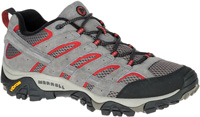
I have worn the same model of hiking shoes (Merrell Moabs) since 2006. But, I didn’t want to write an article entitled “The Single Best Hiking Shoe” (even though I think they may be). So I’ve included four other popular hiking shoes in this list to give you a few more options.
These shoes have been on the market for several years, receive consistently high ratings at online retailers like REI.com and Amazon.com and I see them a lot on the trails.
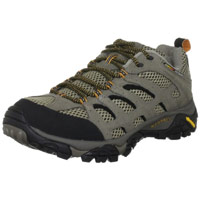
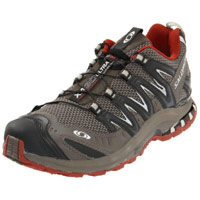
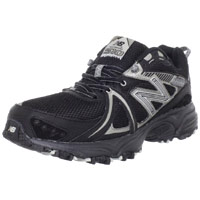
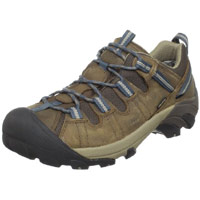
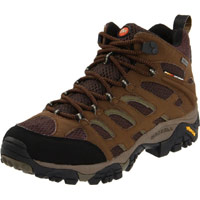
There are lots of other good hiking shoes, but these are some of the most popular choices.
Socks and Insoles
High quality socks and insoles are just as important for foot comfort as a good pair of lightweight hiking shoes. Here are some good options for hiking socks and insoles:
Hiking Socks
Smartwool Light Hiker (Thick)
Smartwool PHD Light (Medium)
Wrightsock Coolmesh (Thin)
Hiking Insoles
Superfeet Premium Insoles (Stiff)
Montrail Enduro Soles (Medium)
Spenco Polysorb Insoles (Soft)
Have a question about lightweight hiking shoes or a recommendation based on your own experiences? Please post your comments below…
 My name is Erik Asorson, aka "Erik the Black." I'm a long-distance backpacker, cartographer and author of
Hi Erik, really appreciate the info you provide on this site. So, I’m doing a three week trip, mostly cross-country in the Sierra and am very conflicted on footwear. Pack will be 35 for the longest section. I am really looking for something more boot-like, but which will provide some cushion for my knees and feet (got some arthritis in knees, and neuroma on one foot). I have Solomon Quests, but feel that they don’t have enough cushion and I can’t get inserts that work. I have Altra Lone Peaks, but they seem a bit too flimsy. I’ve had decent luck with Keens. But anyway, any thoughts on which boot maker offers more cushion on the soles?
Mike: The only hiking shoes I have worn for over a decade are the Merrell Moabs. Since I’m getting into my forties now, and my ankles are toast, I switched to the mid-height which are more like a boot. They provide quite a bit of support and are just as comfortable as tennis shoes I think. It may be that particular brand just fits the shape of my foot perfectly, but I couldn’t imagine hiking in anything else. They come in several different configurations for breathability or waterproofing (ventilators, goretex lined, etc.) But they are all the same shape. Maybe give those a shot and see how they feel.
I was thinking about the New Balance’s since I am definitely on a budget… but do you think the extra money for the Moab’s is worth it for the long term?
@Billy: That depends on how much hiking you plan to do. The Moabs last about twice as long as most running shoes (I usually get about 800 miles out of the Moabs vs 400 miles from trail runners.) So if you plan on doing long distances, it’s actually more economical to go with the Merrells. But if you are planning on doing shorter hikes and it will take a while to rack up 400 miles, the New Balances might be a better choice to get started.
Hey Erik! 2 quick things, have you tried the Merrell Moab Vent 2’s yet? If so, are you still swapping the insole for the Columbia/Montrail? I heard the vent 2 insole was better than previous versions…but I love my current vent 1/montrail combo. TIA!
@Mike: I haven’t had a chance to try the new version of the Ventilators yet since my last pair of the original versions is still kicking. If they have improved the insole that is good news, but I doubt that any stock insole will be of the same quality as the aftermarket insoles (the shoe companies really can’t afford to include a $40 insole with the shoe.) I look forward to buying a pair when my old ones die and trying them out.
Hi Erik.
My girlfriend and I recently agreed to adopt hiking/camping as a new hobby in order to escape NYC every now and again. I was born with pretty bad clubbed feet and had surgery when I was a baby, so now I’ve got extremely flat feet and tight surgically repaired achilles tendons on both feet. I think this is more of a two part question…would you recommend the shoe or the boot for the Merrell Moab, and also what is your best explanation of how the shoe should fit when prepping for a hike? Thanks a lot Erik.
-D
@Derrick: Please take my advice with a grain of salt, since I’m not a podiatrist and am not really familiar with the specific foot issues you have, but here are a few general thoughts. Shoes should fit somewhat loose so that your feet have room to swell, which they will if you do a lot of miles. Many hikers choose shoes a half or full size bigger than they normally wear and sometimes go with wide sizes. For flat feet, I imagine that an aftermarket insole with good solid arch support (like Superfeet Green or maybe even a prescribed orthotic) will help. The major difference between the boot and shoe versions of the Merrel Moabs is the ankle support, but from the ankle down they are virtually the same shoe. The boot versions do provide more stability, which might be good for your achilles.
Take a look at Garmont boots.
Garmont Prophet Low GTX and Garmont Trail Beast GTX.
They don’t have the name brand recognition as the others but they are extremely high quality.
I’ve been wearing their boots for about 10 years and none of the other brands matches up as well for my feet.
Great site Erik, very informative.
I have a question, please. My friend and I are just getting into backpacking and are looking for a hike to do over Memorial Day. We live in Bakersfield so central ca. Do you recommend and web cites for info? Once we settle on a trip we can get a map from you. Thanks!
Hi Erik
Love your site very helpful. I would like to know your opinion of wearing the Merrell Moab mid, in the Grand Canyon? I have always worn an Asolo heavy boot. But I am older 57 and this will be my 4th time down.I will have about 23-24 lb pack ULA circuit.Appreciate any thoughts or information. I have 2 pair of the boot.
Thank you
Randy
@Randy: The most important thing when choosing a shoe is the fit, but as long as the Merrells fit your foot they would work great in the Grand Canyon. They are an excellent warm weather shoe due to the breathable mesh panels, and they offer more support and keep more dirt out than some of the lighter shoe options like trail runners.
Hi Erik
Thanks for your opinion, after wearing the boots around the house I think I will buy the green super feet and have happy feet this year. My heavy Asolo boots will be staying home this time. For the money the Merrells are good boots/shoes. Very ultralight. But I will tell you, your boots are the most important thing to buy and be comfortable with. I have done a lot of research on boots. There are so many.
Thanks Again
Randy
Hi Erik,
I’ve read many of your reports on lightweight backpacking, which I practice since 2010. Thanks to your gear spreadsheet I have been able to easily keep track of my gear and the weight I choose to carry. After selling all of my heavy weight gear and investing in the lightest and best reviewed gear available, I enter/substitute what is new in your awesome spreadsheet. It has taken a while, but with your help I am very conscientious of the weight I carry.
I have a question about long distance walking with a 12lb. backpack. In 2013 I walked the Camino del Norte (a St. James Way route) in Spain. It was rugged and tough for the first couple of weeks; my shoes at that time were the “Inov8 Roclite 282”. Whenever I had to walk on asphalt for a long distance I could feel the burn on my feet when I was done for the day. Without GTX, after many rainy days in muddy trails, I ended up with wet feet.
I would like to ask you for advice on the best walking shoe with lots of cushioning and with Gortex to protect my feet as much as possible. I will be walking another route of the Camino de Santiago in Spain in April, and would like expert advice of what you would recommend. The route is mixed, there are many medieval rocky trails, fields to cross, highways to walk along, and mountain trails to climb.
Would you be able to recommend a pair of shoes that complies with the “lightweight pack (12 lbs,) that I’ll have?
Looking forward to hearing from you.
Mary
Erik
I find all of your information so absolutely amazing. I did a lot of research on shoes and got the Moab Ventilators. I wear size 15 (it would probably be more like a 14.5 but they don’t ever make them) and found that they weren’t wide enough and they don’t comer in a 15 wide (only in 14 or 16 wide). Thoughts? 16 seems too long. And most of the others on your list don’t come in 15 wide either. So bummed
I am gearing up for my first Long Distance(more than 7 days on trail) trip. I am hiking the OHT, then the OT, then tackling the PCT. I know blisters can be a major issue, what about toe socks for blister prevention? What kind of blister kit Should I carry? Second skin? any tips for foot care when doing these hikes?
@LDH Newb: Here is an article with some more tips about footcare. Good luck on your hike 🙂
Erik,
Just wanted to mention Tread Labs. We make insoles that are great for long distance hikers. I am the guy that started Chaco Sandals and I wanted to create a product that would give the same addictive support as Chaco, but in a format that could be used in any shoe. We offer custom level support in a wide variety of sizes and arch heights so that anyone can get a perfect fit. Risk-free home trials guarantee satisfaction. For hikers who are looking for more support than Superfeet, Tread Labs is a great option. Significantly less money than custom orthotics.
Available at http://www.treadlabs.com or email me directly at mpaigen@treadlabs.com
@Steve, As Erik said it isn’t a fad. I started using lightweight shoes about 25 years ago. In the last 10 I’ve moved to New Ballance but now prefer Keens. (Although I have to say, I have been using NB this summer.) New Balance makes a wide shoe and that’s why I started with them.
But you must lower your pack weight. If you have a 40+ pound pack, then running shoes aren’t for you. Consider getting that pack weight down below 25. (I’m 50 years old, and my pack weighs, this summer, 13 pounds before food and water.) I’ve never had a problem with running shoes here in the very rocky, Southern Sierra Nevada.
First I want to say this site is great! I will be ordering your maps. I have always worn hiking boots and now i am thinking of switching to trail shoes. Are they really that much better for hiking or is it just a fad?
@Steve: Unless you will be hiking off-trail on challenging unstable terrain, shoes are almost always better for (lightweight) backpacking – because they are more comfortable and do not abuse your feet as much as boots. Shoes allow your feet to breathe better, they are lighter and more flexible which means fewer hotspots and blisters. Lightweight footwear is not a fad. It is even catching on with bastions of boot wearers (such as hunters and the military.) I recently watched the movie American Sniper and noticed that, instead of combat boots, the main character (Navy Seal Chris Kyle) was wearing Merrell Moab Ventilators, which were apparently Chris Kyle’s real-life shoes that the actor wore to get into character.
Hi Erik:
What a great site!!! I have just gotten back into backpacking after 25 years out. So I’m old and love the idea of reducing my load. I’ve already gotten my basic gear down under 20# (everything but food/water) and am loving it(!!!)and will continue to work to get that down further. Thanks for your help with this! I purchased a number of items a couple weeks ago based on your recs and went out last weekend.
I’m hiking with 30 year old Vasques and am going to upgrade boots. I like the idea of ankle support since I’m a bit out of shape and clumsy. REI has some boots called “Salewa ALP FLOW MID GORE-TEX® BOOTS” that are listed at 605grams (about 20 oz) per pair. This seems remarkably light. I have written the company to clarify if this is per shoe or per boot. I was wondering if you or any of your readers have any experience with this company or specifically this boot? Thanks so much!
Mike,
I tried the Salewa a few years ago when their promise was “blister free or money back” or something along those lines. Premise being their heel-lock design would keep one from blistering. Aside from running 1/2 size or so small and narrow in the toe box, I really liked them. Never had a blister (as advertised) but I don’t wear them any longer due to above issues. Been using The Moab’s since and like them a lot. Just picked up the mid cut (on accident, thought they were the low ones) for $65 at REI. Not a mid cut guy but these are just as nice as the regular Moab ventilators. Do yourself a favor and buy a set…
Really great info. I have to stick with New Balance shoes as they make shoes for wide and wider feet, like mine 4f. I favour the all terrain style starting back with the 800 series and held up well to my 185 lbs.
Love the information and appreciate the time spent in putting it all together.
TW
Hi Erik and everyone. Does anyone have any experience with La Sportiva Ultra Raptor Trail Runners for 3 season baackpacking use? Or the La Sportiva Helios for the same purpose. Both got great reviews and the Helios specifically I just love the way they look honestly. I have Zamberlan boots now and like them but wanted to start hiking and backpacking this year with trail runners. Do these two shoes have enough support for hiking with under 30 lb loads in mainly the White Mountains, Maine, and the Adirondacks?
Thanks for your feedback
Kevin
Eric, how do you determine when a pair of hiking shoes is worn out?
@JimHill: It depends on the shoe. I have worn Merrel Moabs for many years and the only thing that wears out on them is the sole. After about 800 miles the lugs wear down so that the sole is slick and doesn’t provide traction on rocks and slippery surfaces anymore so that’s when I replace them. The body of the Merrells usually outlasts the soles. With other shoes, like trail runners, the body of the shoe will sometimes break down first, the mesh will come apart, the sole will start to detach from the shoe, etc.
Hi Erik, I noticed that the regular moab ventilator is 1 lb 14 Oz while the goretex version is 1 lb 8 Oz. Wouldn’t the lighter weight be better for you? If they are both Moabs why are they so different in weight? You would think the ventilator would be lighter than the goretex but it is not? Strange…
@Theo: That is strange that they would be different weights. As far as I know the only difference between them is the Goretex liner. It could just be that whoever weighed them weighed two different sizes or something like that. Neither of them is the lightest shoe out there (trail runners are lighter) but I still prefer them for overall comfort and durability. I like the Ventilators best because I would rather have cool feet when it’s warm vs. dry feet when it’s rainy.
Nice article and lots of good material here in the comments. I live in FL and haven’t done serious hiking since I was a scout ~20 years ago. Now that my son is in Cub Scouts, my family is camping and hiking more. The hikes are mostly flat ground in North FL. I hike in running shoes because I haven’t invested in hiking shoes yet, which is why I’m here.
The biggest problem I have is that my socks get wet from hiking in wet grass. Wet grass is pretty much the case year round in FL early in the morning. It doesn’t take too far of a walk at all to get your socks wet.
It sounds like the Moabs will be a nice shoe for day hikes, but I’m worried the ventilators will let the water through as easily as my running shoes. On the other hand, the Goretex may get awful hot in the FL sun/heat. Any thoughts?
@Jeff: That is the conundrum with shoes. You can have waterproof or breathable, but usually not both. Wet socks can give you blisters (whether from perspiration trapped inside your shoe or water that leaks in from outside.)
I think what I would do in your case is pack several pairs of thin, lightweight, breathable socks (like Wrightsock Coolmesh). Every couple of hours stop to air out of your feet and switch to a new pair of socks.
Hang the spare socks to dry on the outside of your pack with safety pins (if it is too humid for that, maybe try wrapping them up inside a pack towel or chamois or something that could suck the moisture out of them.)
The Wrightsocks are very thin and lightweight (only an ounce or two a pair) so you could carry several pairs without too much extra weight, they are thin so they won’t absorb a ton of moisture like thicker socks would, and they have two layers (inner and outer) that slide against each other to help reduce friction on your foot.
Hi Eric,
Do you or your readers feel there is a need for better, lock down ankle support in hiking shoes? Our research has told us that ankle sprains are the number one injury in hikers. If all else were equal, would you consider ankle support an important attribute? Our experience in other types of footwear has virtually eliminated ankle sprains. Would this be something that avid hikers would like?
@Barry: If you can provide additional ankle support without compromising other important aspects of a hiking shoe (light weight, breathability, durability, comfort, etc.) then I’m sure hikers would be interested.
Hi Eric,
The Moabs are the most comfortable things I’ve ever put on my feet.
Their one disadvantage, which they probably share with the other low ankle shoes, is that it seems impossible to keep out small rocks and gravel, particularly on downhills.
@Moutin Noir: You could try some gaiters for keeping out the rocks. I have found they make my feet too hot so I don’t use them, but a lot of hikers and trail runners like them.
I’ve experimented with UL hiking footwear. Big beef? They wear out way too fast. I’m back to wearing a three boot stable depending on conditions- Vasque Sundowners( 25 year old pair from Italy) for backpacking, Zamberlans for day hikes, and Marine Corps issued desert boots for hot weather. With the exception of the Zamberlans that I bought in close out (green leather-no GTX) I’ve owned and worn the boots for over two decades of hard use.
Take care of your feet even if it means a few more ounces.
@Michael: Yep, that is one of the downsides of lightweight footwear. I figure I get about 800 miles out of my Merrell Moabs.
Hey Erik,have you worn the Moabs in cold and or wet conditions, such as those typical of the American Southeast (Appalachian Trail)? I was wondering how they would work for fall/winter trips, or if I should consider the Gore-Tex model.
@Ray: I haven’t done any hiking in the east yet, but I have worn the Moab Ventilators and the Goretex version in cold and wet conditions we get out here in a west (Washington fall snow storms, Sierra post-holing and creek crossings and Colorado summer thunderstorms). As far as warmth goes, I find them to be quite warm since they have a lot of padding inside which acts as insulation. You can adjust the warmth by changing the thickness of socks. The Moabs do let more wind and water in, the trade-off is they are more breathable in warm weather than the GTX. If you expect a lot of rain I’d probably go with the waterproof version – otherwise the Ventilators are my favorite.
Hands down if you are looking for light weight hiking boots, I would say the Lowa Renegade is a good deal that balances lighter weight with full functionality. I wear them until the soles come off on all types of terrain. You can’t submerge them in water, but they keep warm and dry with exposure to rain/water.
OK, I’ve gotten my base backpack weight from 40 to 15 lbs., at least on spreadsheet, for my planned JMT next summer. So it’s time to transition from my decades-long use of light Gore-tex boots to these newfangled hiking shoes that customer reviewers insist on calling “boots” for some reason. Anyway, my plan is to get something soon so I can start training myself on what passes for trails here in central Illinois (perhaps I can find a skateboard park where I can simulate hiking on non-horizontal surfaces). I’m worried about forgetting that I’m not wearing boots when I’m finally on trail, though I’ll have a couple chances to hike on hills before starting JMT.
Unfortunately, my size 8 feet (men’s I’ve been led to believe) are way off the low end of the bell curve for Midwesterners, and the closest REI is 150 miles away. I did find ONE pair of size 8 Merrell Moabs in town, which happened to be the “Waterproof” version. I really wanted to like these. But… they were about the worst feeling shoe I’ve ever tried. I could feel a prominent “ridge” along the outside and inside edges (the toe fit was fine). I tried to convince myself that my feet would adjust — these were the only size 8 hiking shoes within 100 miles of me — but the fit was just astoundingly uncomfortable. Was this a bum pair? Or have I become too accustomed to flatter boot bottoms? I tried a variety of other shoes that were all one size too big for me (including Keens) but that didn’t give me any insight.
I should say that I’m one of those people who found Asolo boots to be the most wonderfully comfortable footwear ever created (after using up earlier Vasque and Salomon boots that were fine but not heavenly). I’m not sure what this indicates except maybe that my feet are not typical, or maybe that there are real live Italian or Hungarian men with size 8 feet that are used for modeling these boots.
So now I have to resort to a long online buy/try/return effort. First up are Salomon XA PRO 3D. Then Patagonia Drifter A/C (not mentioned above but good reviews elsewhere). Any others I should try? I’m still wondering if I should order/try another pair of Moabs – I’d hate to miss out on a perfect shoe based on one flawed pair. I may even try some of Asolo’s lighter hiking shoes, but there are zero reviews on these and they are terribly expensive.
Not sure why my post went on so long – but I certainly appreciate any suggestions.
@Charlie: One of the biggest shortcomings of the Merrell Moabs is they have a very stiff midsole and come from the factory with thin insoles that provide almost no cushion to the bottom of your feet. Upgrading the insoles makes a huge difference. If the ridges you described are underfoot you might want to try some thicker insoles (like maybe Spencos which are flatter than some of the other options) and give the Merrells another try, because they are widely regarded as one of the most comfortable hiking shoes on the market.
But, if the ridges were on the upper and pressed against the sides or top of your foot, then the shape of that shoe probably just doesn’t match the shape of your feet well. Finding a shoe that fits your foot is (in my opinion) the most important thing. Even more important than weight or features. If you have already found a boot that fits your foot perfectly, and you are able to break them in enough in advance so that you can hike 15 mile days comfortably without getting blisters, then that might be the best shoe for you.
Extra weight on your feet will mean you’ll have to work a bit harder and you may not be able to cover as much distance as quickly, but it would be better to have a heavier comfortable shoe that feels good on your feet all day long, than a lighter shoe that rubs your foot the wrong way and irritates you. Ideally, the shoe that makes you think about your feet the least is the best. Good luck with your search.
Thanks for the tips! The “ridge” was underfoot, like stepping on a bathtub if your foot was as wide as a bathtub. Upper and toe area fit perfectly. It really was quite strange and I’m tempted to put it down as a fluke. (I’ll try a pair next time I’m at REI even though I think I’m about to settle on something else anyway.)
My old Asolo boots are nearing retirement. Almost replaced with same model, but I got on this UL kick and I’m kind of caught up in it now. Strange thing is I’m remembering (decades ago) prancing around Yosemite in cheap sneakers. Seemed OK at the time. Should be OK again if I give it some practice over the winter months before hitting anything serious, and keep my pack under 25 lbs (and I’m only 150 lbs myself, so even more reason to drop heavy boots I think).
And Yay! I have some new shoes on my doorstep today! So here are some out-of-the-box (actually 2 hour trial) observations:
Patagonia Drifter: They are heavy and very hard to bend, which I expected from reviews but thought might be good characteristics for transitioning from boot to shoe — and for pounding Sierra rocks in general. I really think these could take stepping on a sharp rock edge as well as my boots. Great impressive lugs for traction (I don’t really know anything about lugs — but these impress me nonetheless). They are very comfortable right out of the box. However, I felt top-heavy. And the impressive looking lugs are rounded in such a way that seems to encourage rolling over on the side. I thought I could accidentally turn my ankle just goofing around the house. The impression I got was a great big SUV: makes one feel invincible, but don’t turn that wheel while going fast!
Asolo Quadrant: OK, my first impression here is “elfin shoe,” probably in part because I ordered them in Cypress Green. They are 24.4 ounces for my pair of size 8s. I’m not 100% sure but I think this model might be the very lightest footwear offered by Asolo. Fantastically comfortable. The lugs are much less impressive than the Patagonia and give me the impression they might be slippery on wet rock, though I think I could run up the back of a Mumakil while shooting arrows just fine. They have Vibram soles (as did the Patagonia, but the design is very different) and seem to have good stiffness and only a bit more flexibility than a light boot. In contrast to the Patagonia, I wouldn’t want to step hard on a sharp rock edge with a heavy pack. However, it’s VERY hard for me to turn my ankle in these, at least on flat ground. OK, so they don’t have the funny roll-sideways lugs like the Patagonia, but I think a bigger factor is that my heel sits very low. (I didn’t get far enough in my trial of the Moabs, but I guess these might be similar in being pretty flat to the ground.) Anyway, they still seem heavenly after tightening up and wearing for several hours. And I feel safe and stable in them. I believe I have found my new “trainers.”
There are no professional and very few consumer reviews on Asolo’s lightweight hiking shoes. Is this because they are new? They’re a bit pricey since you can’t find 50% off deals online. Anyway, I’ll give these a fair 6 month testing and maybe write my first Amazon review.
Hey Erik,
Do you have any recommendations for winter hiking boots\shoes?
@Danny: I don’t do any long-distance hiking in the winter, but my everyday winter boots are Propet Cliff Walkers with Darn Tough Merino Wool Socks. Unlike most leather boots they are comfortable right out of the box and require no break-in. On my winter day-hikes (usually about five miles) they keep my feet warm, dry and comfortable even in the snow.
Hey Erik, Since you’re talking about light weight footware… I’ve been wondering what you do for camp shoes? At the end of a long day of hiking you surely must switch into something more comfortable? I know weight is a consideration and this might be considered a luxury item. I was thinking of using some super cheap foam flip flops. I heard of someone using an insole with duct tape. What do you think? You have a good recommendation for one?
@Theo: I don’t carry camp shoes because of the extra weight. I wear size 13 so even a really light pair of flip flops comes in at around 8 ounces for me, which I think is too much. I’ve used homemade insole flip-flops and mesh shower shoes in the past, but eventually decided they weren’t really worth carrying. Now I just loosen the laces on my hiking shoes and use them like slippers if I need to do any walking around camp or go pee in the night. They are soft and comfortable on the inside so it doesn’t feel like pulling on a stiff pair of boots. When I’m sitting around camp I slip off the shoes and let my bare feet air out.
Just wanted to add in on REI… they dont have a return policy its actually a satisfaction garuntee and its now for a year, which is still very reasonable. But you can be turned away if you have used them beyond life expectancy of a product. Please please don’t take advantage of such a great company by just swapping out gear or shoes for new stuff because you can. Hopefully they can be around for years to come.
Mileage obviously varies from one to another – I have put so many miles on my Keen Targhees I am finally wearing through the Vibram soles; They have been great for me. Just as I can’t say they all last, certainly others can’t say none of them do. I have a very wide forefoot and an average heel – the Keens have the perfect fit for me and perhaps that is the reason they have worn so well.
Hi Erik, Nice article. Just wondering, have you ever trek to South East Asian countries, where the terrain are usually muddy & you have to cross rivers with slippery rocks? Are your recommended shoes suitable?
I’m from Malaysia & the most famous hiking shoe here is known as ‘Adidas kampung’. Cost around $3.00. Good durable shoe but not much on everything else. So I’m thinking of buying a ‘proper shoe’ this time. 🙂
@Jaque: I have never been to Asia, but I have hiked in some big-time mud (in Colorado) and crossed a lot of creeks (in the Sierra). The shoes I wear (Merrel Moabs) do not have the grippiest sole, which is one of their weak points. For some reason, I’m not sure why, the shoe designers decided to make the lugs oval-shaped instead of square. Because of this, they are not so great on slippery surfaces. But, I like the rest of the shoe so much, and haven’t found anything else better, that I still wear them everywhere.
Hey Erik, What do you think of the Salomon XT Wings 3?
@David: I’ve not seen the Salomon XT Wings 3 in person so I can’t say much about them. But from looking at them online my first impression is that they do not seem to offer any big advantages over the Salomon XA Pros, which have a longer track record.
I noticed there are several style options for superfeet insoles. Do you have any insight on the differences? I see the green ones most often.
@Bday: Superfeet has a lot more colors and styles now than they did when I used to wear them. I have worn the green, orange and blue versions. The green seem to be the most popular among hikers. The Superfeet Website lists the differences between the models. Two specs to take into consideration are the Profile (the height of the arch support) and Volume (the amount of space in the shoe the insole takes up). The green is high profile/high volume, blue is med profile/med volume, and so on…
Personally, I prefer Montrail Enduro Soles over Superfeet. In addition to keeping your foot in an anatomically correct position they offer better cushioning and shock-absorption.
How many trail miles do you typically get out of a pair on montrail inserts?
@Ben: My inserts usually outlast my shoes. At least 1,000 miles. After a while they start to get a bit flat and the top layer of fabric starts to peel off though.
I have a bad back and plantar fasciitis. So I am trying to go as light as possible on my backpack and its contents, and go for whatever shoe is the absolute best for my feet, regardless of weight.
They say that one pound on your feet is equal to 5-7 lbs on your back. That is a bit misleading I think. It may be true for the work you are giving your legs, but it is not true for what is going on with your back. My back will give out long before my legs get tired.
Just my two cents.
@Chris: You should go with the shoe that feels most comfortable to you. Weight is not the most important aspect of a shoe (fit is). But, what gives heavy shoes their weight is the use of thick, inflexible materials which cause foot pain by artificially constraining the foot and preventing it from achieving a natural range of motion. Chances are that the most comfortable shoe for you will also happen to be lightweight.
Chris, I also have a bad back and plantar fasciitis! I have degenerative disc disease in my back and was told I wouldn’t make it to age 30 without surgery (I’m going to be 35 this year). Stretching every day without fail helps most (twice a day if you can) and I see a chiropractor every two weeks. The Keens listed here flared my PF very badly but the Moabs are extremely comfortable and lightweight and SOLID. I just carried a 30 pound pack for our first backpacking trip this past weekend and my chiro was very impressed by the state of my back despite that, as she had lots of misgivings about me doing it. Good luck whatever you choose but you can’t go wrong with the Moabs for the issues you list here, IMO.
I generally wear a women’s 8.5 but like the fit of a 9 in the moab for foot swelling for long distance hiking. I’m a little weary of going any bigger than that because I have a narrow heel that tends to slip if I do so. Do you think a half size bigger to start off with is enough? Or what do you recommend?
Also, darn tough socks are the way to go! Made in the USA and unlimited lifetime warranty. Smartwool fall apart super easily in my opinion. No comparison in my book.
@Olivia: When it comes to making room for foot swelling I think width is more important than length. You may want to just go up a half size, but switch to Wide (EE) width. I’m not sure if the heel will be too wide, but it seems to me that most of the extra width is in the toe-box. I got a few pairs of Darn Tough wool socks for my winter boots this year and they are great. I look forward to trying some of their lighter weight socks for hiking this upcoming season. Thanks for the suggestion.
Erik, do the Moabs stretch out at all? How do you like them to fit?
@Rob: I haven’t really noticed the Moabs stretching out too much. Perhaps they do, but I haven’t noticed. I do find them to be very forgiving shoes though. They never feel tight or constricting. The inside of the shoe has a pillowy, comfortable lining that fills up the volume of free space and cradles my foot, but does not abrade against them. And they are available in wide sizes, which is good to make extra room for foot-swelling on long hikes.
The only downside of these shoes, in my opinion, is the sole. I get about 800 miles of out of a pair. At that time the shoe is still in immaculate condition, but the sole has worn down. If Merrell could put a more long-lasting sole on these shoes, who knows how long they could last. But, even with the current sole, they are still pretty long-lasting compared to other hiking shoes. The mid-sole is also very stiff, so upgrading your insoles is a good idea (like Montrails or Superfeet) to keep the bottom of your feet from getting sore.
Erik, any suggestions on shoes and insoles for flat feet? I’m constantly plagued with foot pain while on the trail, and since I’m a photographer and often carry heavy gear loads, I’m concerned the lighter hiking shoes might not be tough enough.
@Joseph: I don’t know much about flat feet specifically. Maybe someone else who has experience with that can chime in. Some of the lighter weight running shoes (like the New Balance) have a thinner, more flexible sole that may not provide enough shock absorption for carrying heavier loads. But the heavier-duty shoes (like the Merrel Moabs) have a pretty substantial Vibram sole, similar to a boot. Combined with the right type of orthotics for your flat feet, they might do the trick.
Thank you! Trying to track down a pair locally so I can try them on and feel them out!
@Joseph: Did you manage to get some good suggestions on flat foot shoes. I am flat foot too and my foot pains while on the trail.. I am planning for another backpacking trip in a month or so.. please advise
Bhavna, I have super flat and wide feet. I am female but wear a pair of the men’s size 7.5 wide Moab Ventilators and they are the most comfortable boots I’ve ever had. I’ve had them about 5 months now and while I have done some nice day hikes in them, I just did my first backpacking trip this past weekend. Worked like a charm. The Keens in this article actually flared my plantar fasciitis, as they have a very high arch. I do need inserts now and am unsure where to buy them but figured I’d share my experiences anyway.
Try Superfeet Green insoles. Expensive but the best.
If you look for more arch support, I can recommend to try some of the models from Treksta. They use a different type of last. It works perfectly for me.
I really love hiking and i’m also a huge fan of the Solomon XA Pro 3d.But one problem is its weight.If anyone out there knows of a lighter shoe/boot that would fit for me, it sure would be appreciated.
@Ronald: New Balance 510s and Brooks Cascadias are both around 24 ounces a pair, which is a bit lighter than the Salomons. That’s about the low end of the weight spectrum for shoes that will hold up to the rigors of backpacking. But if you want to go ultralight for short-term or occasional use you could try something like the New Balance MT10 Minimus (only 13 ounces a pair).
Just pulled the trigger on a pair of Merrell Moab Gore-Tex XCRs. I also have wide feet and my last gamble on a $225 pair of Asolo’s (Fugitive GTX) was a bust. Super stable boot, but too heavy for anything beyond a day trip and man did those things tear my feet up. Stiff, narrow, and heavy. After about 100 miles I’ve basically retired them. Shame, waste of money, but lesson learned. I’m getting into more long distance trips and as a bigger guy I need both width and moderate support without going over the 1 lb-per-shoe barrier. I chose the Gore-Tex model since I need an all-season shoe at this point; if I were to do a thru-hike I would go with the ventilator lows. So glad they come in wides!
By the way, great blog Erik. Well-organized and practical.
For the all time best socks that I have ever found try Darn Tough Socks.
Darntough.com
Amazon.com
It occurs to me that the climate I hike in may shorten my shoe life as I hike on the PCT, mostly Sobo in Washington mainly but also Oregon.
While I’m super comfortable distance hiking in the rain, my shoes spend alot of time notably wet which does seem to accelerate wear.
None of the above shoes meet my weight (or flexibility) requirements–they are all WAY too heavy. Since I’ve been spoiled by hiking in lightweight Inov-8’s since 2006, I wouldn’t dream of adding that much weight to my footwear.
Lollygag: Which model of Inov-8s do you like? How many miles on average do you get out of a pair before they wear out?
Indeed Inov-8’s are not the longest lived shoes. So far I’ve used Mudrocs, Terrocs, Trailrocs, Mudclaws, F lites, and another model I can’t recall. Usually I get 500-ish distance hiking miles and some non trail life as city chore shoes after that.
One time I had a pair blow out on the sole after 250 miles, a bit premature but I did not whine to the company as overall they have impressed me immensely.
Once I used the gossamer light racing version of the Mudroc and got an expected 200 miles, but those shoes were sublime to hike in. Usually I try to buy on clearance last years model instead of paying full retail, and I keep many pairs in progressively larger sizes on hand before a sizable distance hike.
A distance hikers shoes are key and this is no place to take shortcuts. If you try a lighter shoe, you will be astounded at what a difference it makes.
This company always had light shoes, but their latest shoes are super light, many at 150 grams and I’ve not tried their latest greatest offerings. However the local running store claimed huge mileage on some they were testing (like 2000) but I’m not sure which model they are touting or what kind of use they are subjecting it to…
Hi Erik, Great site. thanks for sharing so much great info. I’m on my 2nd soon to be 3rd pair of Moab Ventilators. love these shoes. Mostly just use them for day or short overnight BP trips. I scored a brand new pair by luck at a REI used gear sale in 09′ for $40 and have been hooked since. At that time I was getting ready to go to Nepal and I wasn’t really looking for a hiking trail type “shoe” but the shoe fit great and cost/value for those Vibram sole’s was too good to pass up on. Took them to Nepal (i did the Annapurna circuit) but ended up leaving the Moab’s in hotel storage and using my older broken in Merrell boots i knew wouldn’t be a problem especially since we were crossing a 17,800 ft pass which could have snow/ice. I’m a big guy and also have a couple of screws and & pins in one of my ankles so I’ve always chosen to wear hiking boots when i’m doing longer trips. However, I’ve seen the “Light” and would love to do the JMT or another longer trip in the Moabs. I might just have to trial and error by maybe trying the Mid-tops while I continue to work on getting my pack and some extra body weight down.
Hi Erik. Thanks for all the good info you supply. Unfortunately, none of the shoes listed come in women’s narrow. I have an extremely narrow heel and long foot.(My husband calls them ski’s, bless his little heart.) I end up having to wear the heavier boots. The best fitting ones, so far, are New Balance WW978GT. I sure wish these manufactures would start catering to narrow feet. If anyone out there knows of a lighter shoe/boot that would fit a narrow foot, it sure would be appreciated.
@Vicky: I feel your pain. I have the opposite problem (extra wide feet) and for most of my life it was impossible to find good shoes in wide widths. Luckily in the last several years shoe manufacturers have started to catch on and offer wide sizes. Hopefully they will start to do the same for narrow feet. New Balance is the best I know of when it comes to weird sizes. Have you tried the New Balance 968s? They look like they might be a bit lighter and more comfortable than your 978 boots (and they are available in Women’s 2A width.)
Erik, like yourself I have a extra wide foot and I cannot say enough good things about the Keen Targehee IIs. I use the mid and they are so comfortable. I have a hammertoe condition so need a lot of spread in the toebox and I have not found more comfortable than them. You really should try them out. They DO come in wide size and it is perfect for me. I actually use a pair of Injinji hiker toe socks to keep my toes separated even better.I tried the Merrel Ventilators but the toebox doesn’t work well. Too angled and too narrow still. These Keens were a Hail Mary for me and a definite touchdown and I’ve tried a lot of different boots.
Vicky try La Sportiva Wildcats for narrow feet.Just started wearing them and they are a dream.Might not get the mileage but the comfort facter is unreal.Light,dry fast and grippy sole.
I’ve gone the other way on shoes- I use the super thick but not heavy Hoka Mafate. They dry quickly, cushioning is pillow like and you don’t need other inserts. I use rayon from bamboo socks or microfiber dress socks. two pair if its cold. I never have blisters. The Mafate is sized a bit small. I probably am a realistic 9.5-10 and wear 11-11.5 in Mafate. I find them cheap on ebay. They last me about 400-500 miles with the cushioning going first then delalination of sole.
Erik, thanks for your 2013 gear list e-mail
always get a kick out of new gear and updated products. cannot thank you enough for doing the research.
I’m a huge fan of Keens and have never had a problem with them. My first pair finally separated this summer after 7 years of daily wear, and I continued to wear them for 2 weeks until I could replace them.
I’ve owned a pair of NB, but I keep going back to Keens. I just find them to be more comfortable than any shoe I’ve used.
Jester, (Wizards of the PCT film) who did the CDT last year used Keens and according to the new movie only swapped out once. I sent him an e-mail to ask him how many he used, and if he had any problems.
Jesters answer on Keens used on the CDT (used with permission):
“Marty — I actually went through 4 pairs, but mainly because that’s what I was planning to do. In other words, when I switching out the shoes I could have gone a lot farther on the ones I was switching from.
I would say, though, to plan for three pairs minimum. You could stretch it to two; with three you’ll probably end up with the last pair still in good enough shape for back home or weekend hikes or the beginning of the next trail.”
As for REI, their policy is more for the people who are abusing the policy. A friend of mine on the PCT had some problems and REI overnighted her a replacement. (Treking Poles)
i’m a huge fan of the Solomon XA Pro 3d they breath well dry out fast. my only problem with them is that they collect quite a bit of dust in them but its a worthwhile tradeoff.
Salomons have always been my favorite. They don’t last the longest but sometimes I would have liked a stiffer sole but that’s one reason that they are so comfortable.
I can’t remember why anymore but I like the Sole insoles more than the Superfeet I tried 5ish years ago.
I agree with you on the Keens — have a pair of lowtops I enjoy using in the desert or anywhere I don’t expect to be doing shallow stream crossings or hiking in the rain.
But couldn’t disagree more on the Salomans. Bought a pair of mens XA Pro 3D GTX mids last year. Hiked around the ‘hood for a few weeks, then took them to the Bob Marshall Wilderness for a 60-miler last August. Very comfortable when properly laced, but I noticed the trick cinch-up laces kept slipping. I finally put a mark on the lace to convince myself it was really slipping and that I wasn’t just not tightening it up enough.
Secondly, and more importantly, I noticed my feet getting wet. “Hmmm, I thought, this can’t be. These are brand new Gore-Tex boots, expensive and highly rated online.” So I wrote it off to figuring I must have somehow let water get up over the top on a stream crossing (even though I’ve been doing this for 20+ years and KNOW when that happens.) When I got home I bought some nikwax spray and doused them.
Then I submerged them in a utility sink, up pretty high along the sides but nowhere near the top, so no water could enter that way. I held them there for five minutes, with a piece of tissue paper in each one to detect leaks. All was well, no leak.
So I put them on and walked for a half hour and my socks were soaked very quickly. Obviously the water had seeped through the fabric barriers and was waiting for the compressing weight of my body to squeeze it out into my sock.
Like a dummy, I STILL took them on a February trip to the Arizona desert, because I loved the comfort. As luck would have it, the ground was blanketed in snow (Superstition Mountains), and I spent three days with drenched feet. Miserable.
This was both shoes, so it’s not a matter of “they left the goretex out of one by accident” or anything like that. Salomon has gotten their last shoe-dollar out of me. Replaced with some TNF Havoc GTX Mids that have been flawless in water, snow, etc. on the last couple of trips.
I use both the Moabs & the XA-Pro. The Salomon’s are a little more technical & are stiffer underneath for rocks than the Moabs. I use them for backpacking. I took the Moabs to the shoe shop & they added a layer of hard rubber in between for $25 that significantly improved the protection underneath. Both shoes are very comfortable.
Like the last set, I’m antsy about my ankles simply from the decades of experience (falls/heavy rucking over terrible terrain etc)I had in the Army.
I use jungle boots for shorter hikes but these make a lot of sense for serious distance hiking.
The Merrill Moab Ventilator shoes I got a few months ago are one of the best pieces of hiking gear I’ve ever bought. If only I’d known about them years ago. Why did experienced hikers and store employees as recently as 2012 tell me I needed to wear those awful old cinderblocks? Anyone want a good deal on some Lowa and Oboz boots?
I strongly disagree on the suitability of Keens. Their propensity for sole separation from the upper has become epidemic. This, on top of their terrible customer support of thru-hikers, make them a non-starter. I had complete separation on one shoe and partial on the other within 2 days of starting the PCT. Customer service brushed aside my request for expedited service on the trail and demanded photographic evidence, filling out of a long form (which asked for information about the shoes that wasn’t printed on the label) and then said they would begin processing my request in 10 days. I finally got a credit from their web store in about 2 weeks. Never again. I had very good luck with Brooks Cascadias and a lot of people were wearing them on the PCT this year. The Salomons (I used them, too) were less cushioned and the heel linings fell apart after a short time (10 days). My daughter had the same experience with the linings over a slightly longer period.
@3Cats: One good thing about buying shoes from a hiker-friendly retailer like REI.com is their easy return policy. I have seen hikers bring in a pair of ratty shoes, even after several hundred miles of use, with a complaint about comfort or durability and they replaced them on the spot. Not sure what their return policy is by phone, but I imagine it would be easier than dealing directly with the manufacturer.
How many miles were you able to get out of a pair of the Brooks Cascadias?
All true about customer service, Erik, but the main point is that Keens fall apart with startling frequency. I used my Cascadias for about 400 miles before having to get off for the season and they showed virtually no signs of wear. I highly recommend them. Thanks for all you’re doing to improve the long-distance hiking experience!
This very morning in the Wall Street Journal there was a piece on REI’s new restriction on their returns policy.
It’s still available without question though for the first year and forever for defective goods.
Would you use the Merrells for JMT?
OldGreyGoose: Thanks for the heads up on REI. I’m glad to hear the return policy is still in effect for the first year. That should be enough time to put most gear through it’s paces.
I have used the Merrells on the JMT and they work great. If you don’t mind wet feet get the Ventilators. If you want to try and keep your feet dry you can go with the Goretex version.
But I find that trying to keep feet dry when crossing creeks and walking through snow is an uphill battle. I don’t even bother anymore. I just walk through the creeks with my shoes and socks on and keep on trucking, squishing along until the sun dries them out.
One good thing about the ventilators and other breathable shoes compared to those with a waterproof liner is they do not trap moisture inside (when it comes in over the top of the shoe). So when they do get wet they dry quickly afterward.
Hi Eric,
On your advice I’m about to buy the Moab’s.
I notice your link from Merrell Moab Ventilator Hiking Shoe links to Merrell Moab Ventilator Cross-Training Shoe. Are they the same shoe?
Thanks
@OldGreyGoose: Yes, they are the same. The Merrell Moabs come in four different configurations:
– Ventilator Lowtop (super breathable)
– Ventilator Midtop (super breathable)
– Goretex XCR Lowtop (waterproof liner)
– Goretex XCR Midtop (waterproof liner)
I prefer the Ventilator Lowtops for most of my hiking.
Eric, I’m currently looking at a pair of discontinued Merrill Hilltop ventilator shoes. Do you know how they compare with the newer Moab ventilators? I know the Moab’s have a Vibram sole. But I don’t think that’s worth the additional $40. Thanks.
I agree my keens fell apartbalso. I will never buy another pair.
Sole separation and leather fell apart
I read that I should buy shoes 1/2 to 1 size larger for a thru hike because my feet will swell. Is this true? I bought a pair of shoes which are too large. I am training in them and my footwork is bad because the fit is sloppy even with extra thick socks. Should I use shoes that fit or shoes that are too large for the John Muir Trail?
@Kirbys Mom: It is true that your feet may swell on a long hike. However, I feel that getting a wider shoe is sometimes more beneficial for foot swelling than a longer shoe. Going a full size up means a longer shoe with more room for your foot to slip around, in as you’ve noticed. One thing you can do to take up space in the shoe while you are training is to get a thicker insole (or even two thinner insoles). You could even start your hike with this setup, and then remove one of the insoles to create more space as your foot swells. Or, if your shoes are available in wide or extra wide versions, you may want to get the same size or just a half size larger than you normally wear, but in a wide width. With wide shoes, you can use the laces to cinch it down around your foot and hold it in place a little better than with long shoes while your feet are normal, and as your foot swells just loosen up the laces.